Author : CCDI Events
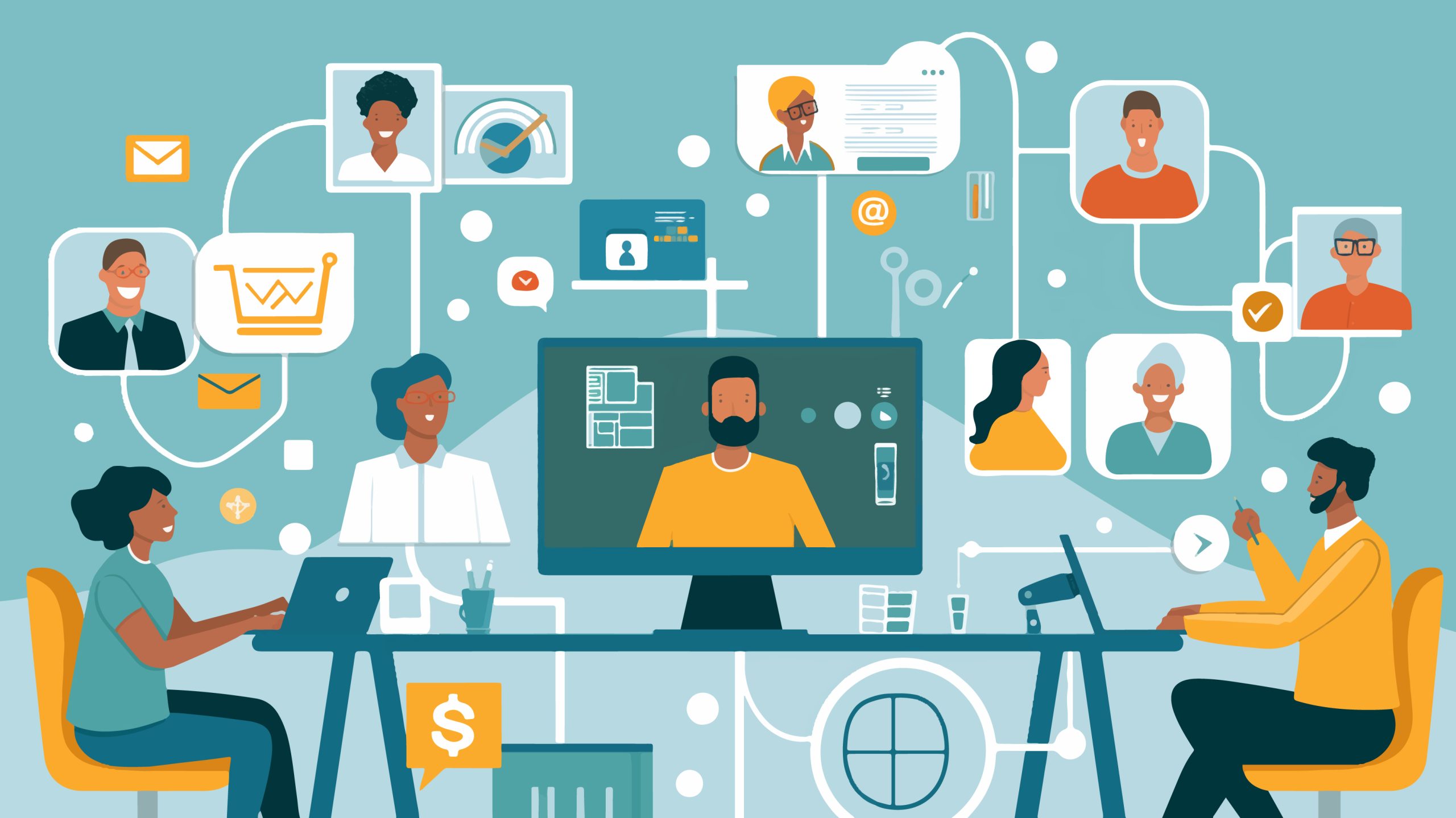
Virtual events have reshaped how national organizations connect with their communities. They remove geographical divides, eliminate travel costs, and, importantly, offer the opportunity of broader civic participation, including those who cannot attend a physical event for accessibility reasons. Yet, virtual spaces can unintentionally replicate the same barriers found with in-person events.
CCDI UnConference brings together changemakers and professionals to engage in interactive workshops, experiential learning, and meaningful networking that supports measurable change in diversity, equity, inclusion, and accessibility initiatives.
For CCDI UnConference, our objective each year is to host an impactful, two half-day virtual gathering where inclusion is a foundational principle. Delivering that commitment requires overcoming the technical limitations of digital platforms, rethinking standard operational timelines, and adopting an honest, iterative approach to accessibility. For CCDI’s events team true inclusion is a continuous operational practice built on intentional choices, clear team capacity, and community accountability.

Designing for accessibility first with CCDIs virtual UnConference
Accessibility cannot be added at the end of an event plan; it needs to shape the event from the beginning. For CCDI UnConference, that means using Design Justice as a planning foundation, including Sasha Costanza-Chock’s principle of centering the voices of people most affected by design decisions. In practice, we ground this approach in the disability justice commitment of Nothing About Us Without Us (NAUWU).
Compliance frameworks and legislation like the Accessible Canada Act (ACA) and its provincial counterparts matter. They set vital legal baselines that protect attendees’ fundamental rights. However, treating compliance as the ultimate finish line can push event organizers into a rigid, check-box mindset which risks stalling teams who fear falling short of an unattainable standard. True accessibility should be seen as an ongoing, responsive discipline of actively identifying and dismantling barriers as technology, community needs, and our own understanding evolve.
This commitment starts where priorities are established: the budget.
Having a dedicated budget is critical to an accessibility plan that works. Accommodations should not be contingent on ticket sales, sponsorship, or the timing of requests. By establishing a dedicated budget line item, we prioritize the capacity to support American Sign Language (ASL) interpretation, dedicated live bilingual English/French simultaneous interpretation, live captioning, and accessible digital materials from the outset.
Prioritizing funding upfront fundamentally shifts our role as reactive to proactive readiness. Having budget support and maintaining access workflows as standard operational baselines rather than ad-hoc tasks, signals to attendees that their participation was anticipated and valued from the start.

Choosing event technology with lived experience in mind
Finding the right virtual event platform can feel like comparing marketing checklists. Software vendors regularly claim full accessibility compliance, but automated audits only tell part of the story. To genuinely understand our digital event space, we engage with feedback from community members with disabilities to test our virtual event environment.
The lived experience of people living with disability sheds light on friction points and barriers that cannot be captured in a spec sheet. Even industry-standard tools can present functional hurdles in live environments. Over two content-filled half-days, navigating panels, chat feeds, and presentation decks can cause cognitive fatigue. Additionally, poorly structured keyboard navigation or crowded visual layouts can create disorientation for screen-reader users. Recognizing that no off-the-shelf software is completely barrier-free, our strategy focuses on implementing manual operational bridges and transparent communication.
Our team fills the gap where technology falls short. We develop onboarding communications that are sent to attendees ahead of time, preparing them for platform quirks, keyboard navigation, audio-channel toggles, and view configurations. During live sessions, dedicated moderators are available to support attendees with instructions.
By testing early, we move away from generic troubleshooting. Instead of expecting attendees to adapt to the limitations of the software, we plan ahead to use technology to serve the audience, not the other way around.

Managing events: The journey of turning knowledge into everyday practice
Due to the pandemic, the events landscape has shifted significantly in the last five years, from mostly in-person gatherings to virtual formats. New complex hybrid event models, demand a distinct technical and logistical toolkit. One lesson that should be applied across all formats is that accessibility must be operationalized through deliberate training and structured processes; it cannot rely on good intentions alone.
Acquiring and applying accessibility knowledge is an ongoing professional journey. It is one thing to study accessibility guidelines on paper, and another to coordinate multi-language audio routing, manage multiple live feeds, and troubleshoot display issues during a live broadcast. Bridging that gap requires turning high-level inclusion principles into practical standard operating procedures.
For CCDI UnConference, preparation starts long before the opening remarks. Structuring the agenda across two half-days was an intentional choice to respect attendee energy and screen fatigue. Ahead of time, we run comprehensive tech rehearsals and speaker preparation, ensuring presenters understand the operational mechanics of access:
- Verbalizing visual deck content
- Pacing speech for interpreters and attendees
- Sharing accessible presentation materials in advance
We audit our presentation slides for contrast, include multiple breaks in the event agenda, and establish clear backup plans for technical issues.
Crucially, this work cannot be treated as a checkbox of one team or department alongside registration and speaker management. Delivering an accessible event requires dedicated capacity across multiple teams working on this project. Team members whose primary mandate includes monitoring accessibility workflows and supporting attendees helps contribute to a calm, dignified attendee experience.

Using event data and community feedback to drive real improvement
When collecting post-event data, it can be easy to gravitate towards the “big” metrics of ticket sales, attendee counts, or general satisfaction scores. With accessibility, however, data should serve as an accountability mirror. Evaluating success requires genuinely listening to how the attendee experience felt on the other side of the screen, feedback that acts as our most valuable strategic guide.
For UnConference , delivering bilingual access is essential, and investing in professional human simultaneous interpreters allows us to preserve linguistic nuance and organic delivery across both half-days. Alongside our interpreters, we deploy different real-time captioning tools including automated captions embedded into the event platform interface. This is a way to explore an option that considers user-experience which eliminates the need to navigate split-screens or having to toggle back and forth between the broadcast and external third-party captioning links.
Keeping everything in a single unified window provides its own accessible utility. At the same time, our community’s feedback reminds us that while automated tools offer seamless convenience and high accuracy, they still fall short of fully matching precision, cadence, and cultural nuance of professional captioners.
We see this feedback as a roadmap rather than a critique. As we plan for the next UnConference, this data directly guides our future technical workflows and budget planning, challenging us to find innovative delivery methods that combine the high accuracy delivery of dedicated interpreters with a seamless event experience that our attendees value.

Last thoughts in designing the next accessible event
Creating accessible virtual events is a fixed practice of listening, adjusting, and resourcing. The success of CCDI UnConference is not a fixed perfect state of virtual conference, but a dynamic approach to accessibility with intentional budgeting, hands-on community testing, and an organizational willingness to learn from our gaps. Our straightforward takeaway from this is to start where you are but start with intention.
- Carve out an accessibility budget on day one
- Involve community members with lived experience to test the event environment
- Start testing event technology long before the event date
- Design agendas that respect the energy bandwidth of your attendees
- Treat feedback as an operational gift rather than a critique
Meaningful progress happens when we stop waiting for perfect technology and start designing intentionally for the community in front of us.
Join us at CCDI UnConference
Be part of a transformative experience at CCDI UnConference for two half-days of learning and unlearning—as we uncover actionable strategies to drive inclusion in your workplace and community.