Blog

  • Learning to see beyond 

    Learning to see beyond 

    Written by Rayhan Azmat, CCDI UnConference 2026 keynote speaker 


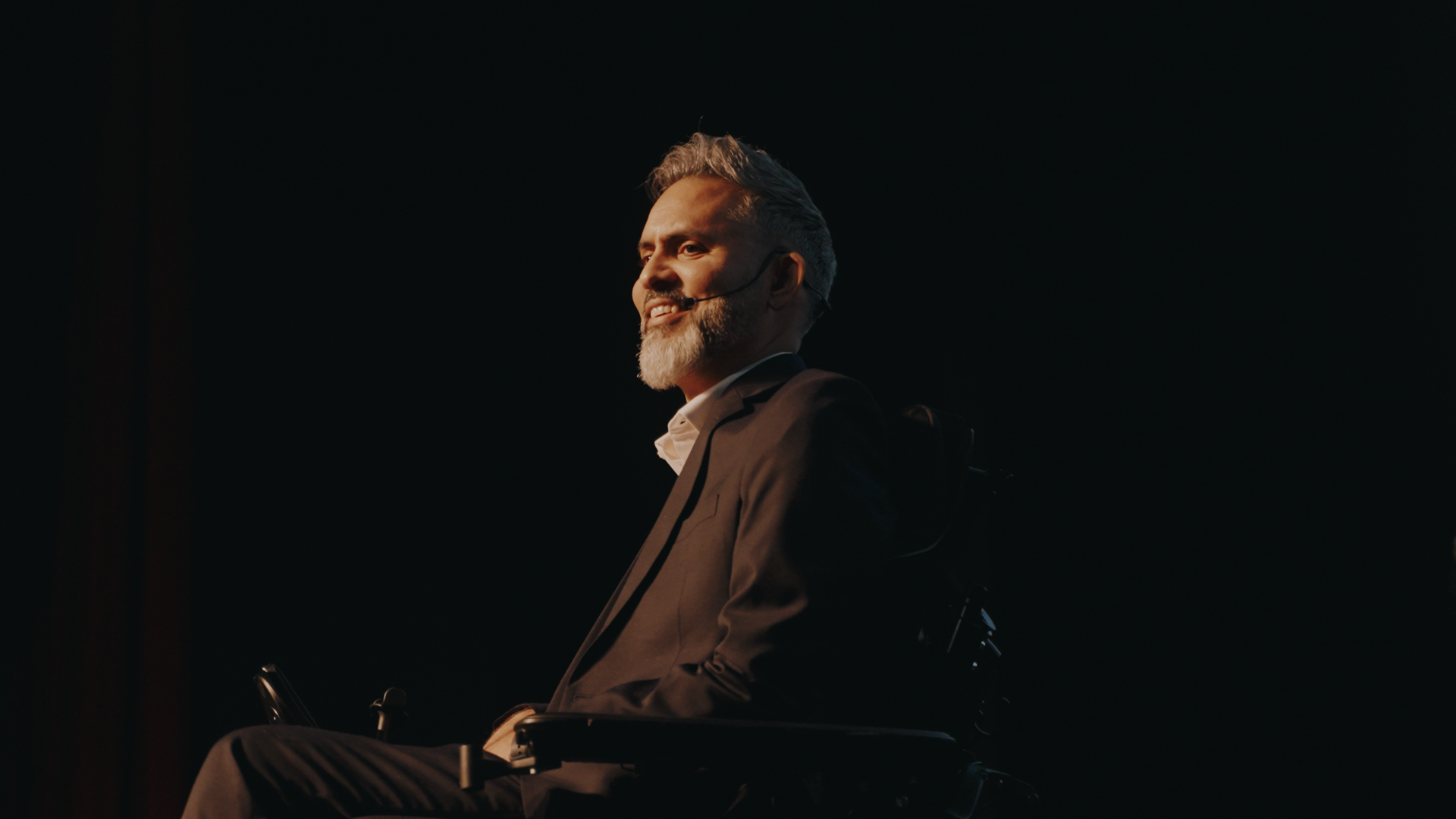
    I see a shift in perception happen most clearly when people encounter my story for the first time. By the end of the conversation, they are often surprised by how much their original assumptions have changed. 

    That quiet recalibration is what this is really about. 

    At the beginning of a keynote, people see what is immediately visible. A wheelchair. A narrative that feels familiar before a single word is spoken. But as the story unfolds, something changes. What people respond to is not inspiration in the abstract. It is recognition. The realization that what they thought they understood at first glance was incomplete. 

    Not because the facts changed. 

    But because the story widened. 

    That shift feels immediate to the audience. 

    Living it was different. 

    It began much earlier, more than two decades ago, with a rare muscle condition that forced me to adapt long before I had language for what I was doing. Day by day, I learned how to work around limitations and keep going, even when the future felt uncertain. 

    For a long time, adapting was simply part of daily life. It was not something I framed as resilience or strength. It was just what was required. Plans shifted. Approaches adjusted. Progress came through consistency rather than certainty.  

    Only much later did I understand how formative that experience had been. 


    Perspective under pressure 

    Like so many organizations, the first months of the pandemic collapsed certainty overnight. Revenue disappeared. Operations shut down. Long-range plans became obsolete almost instantly. The only thing everyone knew was that the old playbooks no longer applied. 

    As the leader responsible for financial planning, my role was not simply to react. It was to help the organization see a path forward when no clear one existed. That meant building scenarios in real time. Revising budgets repeatedly. Communicating uncomfortable truths clearly and calmly. Sitting in rooms with senior leaders, not to predict the future, because none of us could, but to decide how we would navigate it together. 

    What mattered most in those moments was not just technical skill. It was perspective. 

    The ability to stay steady under pressure. To hold multiple possible outcomes at once. To lead with clarity even when certainty was unavailable. 

    What I did not fully appreciate at the time was how much my own lived experience had prepared me for that environment. 

    Years of adapting had quietly built a different kind of resilience. Navigating change was not new. Staying calm when the ground shifts was not theoretical. It was practiced. 

    That perspective did not replace the experience of others around the table, many of whom had navigated crises of their own. It complemented it. Different paths, different challenges, shared responsibility. Together, those varied experiences became a strength. 


    When stories widen 

    The conversations after keynotes often follow a similar pattern. Many come from parents of children with visible challenges who connect the change I speak about on stage to the change shaping their own lives. 

    They describe how fully their lives have become oriented around managing what is directly in front of them: Appointments. Systems. Barriers. Logistics. In that constant effort, they admit they have stopped imagining what might come next. 

    Not because they lack belief or love. 

    But because the system surrounding them makes it hard to picture anything else. 

    What stays with me most is when they say this was the first time they were able to see their child beyond the immediate challenge. To imagine a full life. Contribution. A future defined by more than what needs managing. 

    That moment is not about me. 

    It is about what happens when perspective shifts, when the story widens just enough to allow possibility back in. 


    What we miss when we don’t see beyond 

    When I roll into a room, part of my story is immediately visible. Before I speak, before I contribute, before I demonstrate anything I am capable of, a narrative has already begun. Not out of malice, but out of habit. 

    What is less obvious is how often the same thing happens when nothing is visible at all. 

    Most people carry challenges that never announce themselves. Pressure to provide. Fear of failure. Health concerns. Caring responsibilities. Doubt about whether they truly belong. None of it appears on a résumé. None of it shows up in a meeting invite. 

    And yet, those unseen stories shape how people show up just as much as the visible ones do. 

    The difference is simple. When a challenge is visible, it risks becoming the headline. When it is invisible, it is often ignored, even though the weight is just as real to the person carrying it. 

    Seeing beyond is not about focusing on difference. It is about resisting the urge to let any single detail, visible or not, define the whole person. 


    Where opportunity is quietly shaped 

    In professional settings, assumptions tend to form early. Sometimes they are subtle. Sometimes they are well intentioned. But once they settle in, they quietly shape opportunity. Who is trusted. Who is stretched. Who is invited into the room when decisions are being made. 

    Seeing beyond is the deliberate choice to interrupt that instinct early. 

    Not to lower the bar. 

    But to sharpen it. 

    Looking back, what I am most aware of is this: I delivered results because I was given the opportunity to do so.  

    The value I was able to contribute did not come from being helped. It came from being trusted. 

    At key moments, people chose not to let assumptions stand in for understanding. They did not rush to conclusions about what I could or could not do. They asked. They listened. They focused on capability instead of constraint. 

    That choice mattered. 

    Because when we see beyond surface narratives, we do not offer charity. We unlock contribution. 

    And when enough of us do that, we are not just changing one person’s path. 

    We are reshaping the story we all share. 


    Rayhan Azmat is a vice president and senior finance executive at a public company, and a keynote speaker focused on leadership, resilience, and navigating change. 


  • Could DEIA strengthen the learning culture that drives innovation?

    Could DEIA strengthen the learning culture that drives innovation?

    As we begin 2026, many organizations are deep in strategic planning mode. Conversations about the year ahead often circle around innovation, AI adoption, new technologies, shifting markets, customer expectations, and the need to adapt quickly. This time of year naturally invites practitioners and leaders to reflect on where growth is needed most and on what will help organizations stay relevant, resilient and future-ready.

    But amid these forward-looking questions, there is a quieter yet powerful truth emerging from decades of research: the strongest innovators tend to be organizations with a strong learning culture. Studies show that innovation is not driven by technology or strategy alone, it is driven by cultures where people learn continuously, share knowledge openly, feel safe to challenge assumptions, and are encouraged to experiment and adapt.[1]

    This raises an important point of reflection as we prepare for 2026: If innovation depends so heavily on learning culture, then what conditions allow learning itself to thrive?

    As we explore these dynamics, many of us begin to notice an interesting intersection.

    The qualities that strengthen learning cultures are also at the core of DEIA practices, such as psychological safety, shared power, equitable participation, accessibility, cultural humility, and openness to diverse perspectives. This invites a deeper consideration, one that reframes the conversation entirely:

    What if DEIA is the learning culture that innovation requires?

    This is where the conversation shifts.


    The innovation secret hiding in plain sight: Organizational learning

    Organizational scholars have long studied the relationship between learning and innovation. Research describes learning organizations as environments where experimentation, reflection, and continuous improvement are expected.[2] In learning cultures, people build and share knowledge in ways that help organizations respond to change more effectively than their competitors.

    A 2023 study reinforces the connection that psychological safety, collectivism, and lower power distance (meaning individuals feel comfortable to contribute and question decisions) were strong predictors of innovation.[3] Innovation emerged not primarily from expertise, but from the relational conditions that allowed people to contribute, challenge, and co-create.

    What becomes clear across these findings is that innovation is not only technical, it is also cultural, relational, and deeply human.

    These proven drivers of innovation naturally invite us to consider how closely they align with the principles emphasized in DEIA.


    Why the best innovators are also the most inclusive

    If DEIA is the learning culture innovation needs, it may be helpful to explore where these two conversations intersect.

    Innovation research consistently points to conditions such as:

    • Trust
    • Psychological safety
    • Equitable participation
    • Shared power
    • Cognitive and cultural diversity
    • Accessible systems
    • Openness to challenge

    These are not DEIA findings; they are innovation findings. Yet, they mirror, almost precisely, the conditions DEIA seeks to cultivate. Practitioners and organizations are encouraged to consider,

    • If innovation requires risk-taking, what enables people to take risks safely?
    • If innovation thrives when power distance is low, how do organizations redistribute influence?
    • If innovation benefits from diverse thinking, how do we ensure those perspectives are welcomed and valued?
    • If innovation relies on learning, how do we make learning accessible and shared?

    Here we notice a natural alignment between what innovation research demands and what DEIA practice can strengthen.


    Who gets to learn? The question that determines innovation success

    Innovation often fails not because people lack ideas, but because learning is selective and limited to those who already have voice or psychological safety. Research suggests:

    • Strong learning cultures are 92% more likely to innovate, 37% more productive and 46% more likely to be first to market with new products.[4]
    • Historically, organizations with diverse management teams earn 19 percentage points more revenue from innovation, with these teams generating 45% of their total revenue from innovation compared to just 26% for less diverse teams.[5]
    • A 2024 study revealed that psychological safety drives employee innovation primarily through improved communication and information-sharing behaviors.[6]
    • Teams with higher psychological safety show stronger learning and higher productivity, meaning they work and grow better together.[7]

    These are innovation statistics that naturally raise considerations around DEIA, not as ideology, but as a relational framework that supports healthier learning conditions.


    The six conditions that turn learning into innovation

    Every organization talks about learning, but few pause to consider what actually makes learning possible in the first place. Learning is more than simply absorbing information, it’s about having the conditions that make curiosity feel safe, meaningful, and shared. It’s the environment around the learning, not only the learning itself, that shapes how innovation stays active, agile and present.

    People tend to learn more openly and more consistently when they feel:

    • safe to experiment
    • included in the conversation
    • valued for their insights
    • able to challenge norms
    • supported by relational trust
    • not punished for failure

    These needs are quite simple, but they have a very powerful effect. When these conditions are present, learning becomes something people actually want to do, not something they feel they must do.

    What often gets overlooked is that learning is shaped by tone, trust, and belonging, as well as the everyday cues people receive about whether it’s safe to stretch beyond what they know.

    This is where DEIA can offer something meaningful, not a prescription, but a way of paying attention to the experiences that either open learning up or quietly shut it down. DEIA practices can help organizations notice subtle dynamics (e.g., who feels heard, who hesitates, who participates fully) that ultimately influence whether learning cultures flourish or falter.

    You are invited to consider what becomes possible when learning cultures are shaped with deliberate attention to equity, belonging, accessibility, and diverse voices.


    The 2026 innovation question: are your people ready to learn differently?

    As organizations and practitioners set their priorities for 2026, the conversation about innovation’s role within organizational learning culture is only going to grow louder. Keep in mind, however, that the act of simply adopting new learning tools or building new pathways is not enough to drive that innovation to succeed. Its success depends on whether people are ready to learn, adapt, and work in new ways. Technology can open the door, but a strong learning culture determines whether anyone walks through it.

    This is where a deeper opportunity emerges. Innovation thrives when people feel equipped and willing to learn differently. Learning thrives when the environment supports curiosity, safety, voice, and shared understanding. And these conditions closely mirror many of the values that DEIA brings into an organization: values that enhance connection, awareness, access, and equitable participation. Looking ahead, leaders and practitioners may want to pause and consider three key areas that can shape how innovation and learning intersect in 2026.

    1. Supporting people to learn differently

    Are we supporting our teams, not just with new tools, but with the confidence, space, and encouragement to learn in new ways? Innovation requires people to try unfamiliar approaches, ask questions, experiment, and reevaluate old habits. Support means giving people the conditions, time, psychological safety and shared understanding, that make new learning possible.

    1. Expanding who gets to participate in innovation

    Are we broadening the circle so more people can meaningfully contribute ideas, insights, and perspectives? Innovation accelerates when participation widens. DEIA aligned practices can help ensure that more voices, lived experiences, and diverse forms of knowledge are included in shaping new pathways. Expanding participation strengthens creativity, problem-solving, and long-term capacity for innovation.

    1. Building trust through a strong foundational learning culture

    Are we cultivating the trust, safety, and shared cultural practices that help innovation take root and stay durable? Trust is what turns learning into action. Without it, new ideas stall. With it, people take risks, they collaborate, and they stretch. A strong learning culture grounded in safety, belonging, access, and mutual respect lays the long-term foundation that keeps innovation alive and sustainable.


    Ready or not: why 2026 belongs to organizations that learn differently

    As you settle into 2026, the invitation is simple: pause and consider not just how your organization will innovate, but what conditions will enable individuals to be willing and able to learn in new ways. Innovation grows where learning is shared, where people feel safe enough to stretch, and where diverse voices can shape the path forward. If this conversation has done anything, let it spark the realization that preparing people and building the strong learning culture they need may be the most future-ready move you make in 2026.

  • Building fairer workplaces: Ontario’s new job posting rules coming January 2026

    Building fairer workplaces: Ontario’s new job posting rules coming January 2026

    On January 1, 2026, Ontario will implement a transformative set of reforms to the Employment Standards Act (ESA), reforms that place diversity, equity, inclusion, and accessibility (DEIA) at the heart of the hiring process. These changes aim to dismantle systemic barriers and promote fairer access to employment through greater transparency, accountability, and inclusivity in publicly advertised job postings. Employers will face new obligations around disclosure, prohibitions, and record-keeping, while job seekers, especially those from equity-deserving or marginalized communities, will gain new rights that support equitable hiring practices. This blog post breaks down what’s changing, why it matters from a DEIA perspective, how both employers and applicants can prepare, and practical steps to lead with inclusion.

    Key ESA changes supporting DEIA

    Here are the key new obligations under the ESA for employers that apply as of January 1, 2026. These apply only to employers that have at least 25 employees on the day the publicly advertised job posting is posted.

    1. Removing barriers: The ban on Canadian experience requirements

    Although this was already part of the Ontario Human Rights Code, one of the most impactful changes to Ontario’s ESA is the prohibition of “Canadian experience” requirements in publicly advertised job postings and application forms. This change directly addresses a long-standing barrier faced by internationally-trained professionals, many of whom are newcomers to Canada. This change recognizes the value of global experience and helps newcomers contribute their full potential to the workforce. By eliminating this criterion, the legislation promotes fairer access to employment opportunities. It’s a meaningful step toward dismantling systemic bias in hiring and fostering a more inclusive labour market.

    Call to action for employers

    • Review and revise all job postings to ensure they do not reference Canadian experience as a requirement, directly or indirectly.
    • Educate hiring managers and teams on inclusive evaluation practices that value diverse professional backgrounds and competencies.


    2. Advancing pay equity: Mandatory compensation disclosure

     As of January 1, 2026, Ontario employers will be required to include either the expected compensation or a salary range (with a maximum range spread of $50,000) in all publicly advertised job postings. This change is a required step toward pay transparency, helping to close wage gaps and support equitable compensation practices across sectors. By making salary expectations clear upfront, job seekers – particularly women, racialized individuals, and other equity-deserving communities – are better positioned to advocate for fair pay and make informed career decisions.

    Call to action for employers

    • Standardize salary bands across roles to ensure consistency and fairness.
    • Audit compensation policies to identify and address any biases or inequities in pay structures and job families.


    3. Ensuring fairness in tech-driven hiring: AI use disclosure

    Under the new ESA requirements effective January 1, 2026, employers in Ontario must disclose when artificial intelligence (AI) is used to screen or assess job applicants. This change is a critical step toward increasing transparency and accountability in recruitment processes that rely on technology. AI tools, while efficient, can unintentionally reinforce biases if not properly designed or monitored, potentially disadvantaging equity-deserving groups such as Indigenous Peoples, racialized candidates, persons with disabilities, or newcomers. By mandating disclosure, the legislation empowers applicants to understand how their data is being used and encourages employers to take responsibility for the fairness of their hiring systems.

    Call to action for employers

    • Conduct a thorough audit of all AI-based recruitment tools to assess for bias, fairness, and compliance with human rights standards.
    • When applicable, include a clear and visible statement in job postings that has been used in the screening or assessment process, specifying how and at what stage it is applied.
    • Engage diverse parties in evaluating AI tools to ensure inclusive design and implementation.


    4. Respecting candidate dignity: Timely communication after interviews

    Starting January 1, 2026, Ontario employers will be required to notify all candidates who were interviewed of the final hiring decision within 45 days. This change is more than procedural; it’s a recognition of the emotional and professional investment candidates make during the hiring process. Timely and respectful communication is especially important for equity-deserving groups, who may already face systemic barriers and uncertainty in employment. By formalizing this requirement, the ESA promotes a more inclusive and transparent candidate experience, helping to build trust and reduce the stress associated with prolonged silence or unclear outcomes.

    Call to action for employers

    • Establish structured follow-up protocols that ensure every interviewed candidate receives a timely update, regardless of the outcome.
    • Craft inclusive and respectful communication templates that acknowledge the candidate’s effort and provide closure, while maintaining a positive employer brand.

    Final thoughts

    The upcoming January 2026 ESA changes represent a positive step forward for fairness and inclusion in Ontario’s workplaces. By being transparent about pay, open about technology, and welcoming to diverse experiences, employers can help create a labour market that truly reflects Ontario’s and Canada’s , resulting in a stronger, more equitable workplaces for everyone.

  • Indigenous sovereignty and DEIA in the ecosystem of AI

    Indigenous sovereignty and DEIA in the ecosystem of AI

    By Rochele Padiachy and Usman Qazi

    2025 marks the 10-year anniversary of the Truth and Reconciliation Commission’s (TRC) final report and its Calls to Action. These 94 calls to action speak on a variety of issues where reconciliation advancements are needed, and 10 years later, there is still much work to be done. At the same time, we are witnessing a rapid technological transformation in artificial intelligence (AI), a powerful tool that is reshaping how we access, produce, and interact with information online.

    Beyond ChatGPT: Understanding AI’s impact on inclusion

    AI is trained in large-language models (LLMs) which are advanced systems that can perform cognitive functions such as learning and problem-solving, can create high quality content such as audio, images, text, and code.[1] An example that you have probably seen is ChatGPT, one of the better-known LLMs that can generate human-like text and photos in a conversational way. While there can be positive uses for an AI system such as ChatGPT, it also has high tendencies of providing incorrect information, potential negative biases from its training data, privacy concerns, and significant environmental impact from its energy use.[2]

    This is important for people to consider because when we talk about AI and its intersection with DEIA, we should understand what it brings to these kinds of spaces. This technological boom has people wondering how it would affect and even influence inclusion, accessibility, and diversity frameworks. We need to think about DEIA values within the AI ecosystem, because without doing so, we risk reinforcing barriers to accessibility and awareness. One of these risks includes repeating harmful rhetoric that continue to harm Indigenous communities specifically. As AI becomes deeply embedded in our institutions, and as we think about the work that still needs to be done for the TRC and its Calls to Action, we must ask ourselves: what does it mean for Indigenous sovereignty in the digital age?

    This is where techquity comes into play.

    Techquity: Beyond access to agency

    When we talk about techquity (technology + equity), we’re referencing something far deeper than access to Wi-Fi or a new device.[3] Techquity is focused on ensuring that the development of technology actively promotes equity and social justice for all communities. True equity in technology is about participation, the ability to help shape, govern, and benefit from the systems that increasingly define how we live and learn, and, more importantly, our connection to one another.[4]

    Access without agency isn’t equity, it’s dependency guised as inclusion.

    For many marginalized and racialized communities, even being connected hasn’t always meant being empowered. This holds true for many Indigenous communities across Canada and beyond. In a report written by The Assembly of First Nations and Indigenous Services Canada, the digital connectivity gap is severe, as only about 40% of First Nations communities have access to high-speed internet, while large existing disparities such as education, health, and employment continue to occur.[5] With the addition of AI, these spaces, without proper dialogue or consent, risk repeating old patterns and widen the digital connectivity gap. Innovation becomes another form of extraction rather than collaboration.

    Without proper dialogue or consent, the addition of AI to these spaces risks repeating old patterns and widening the digital connectivity gap, where innovation becomes another form of extraction rather than collaboration.

    Māori-led AI design: The koru model

    So, the question isn’t just how Indigenous communities access AI, but who decides how it’s built, trained, and used. These tools should be developed in partnership with Indigenous communities, grounded in Indigenous worldviews and governance practices.

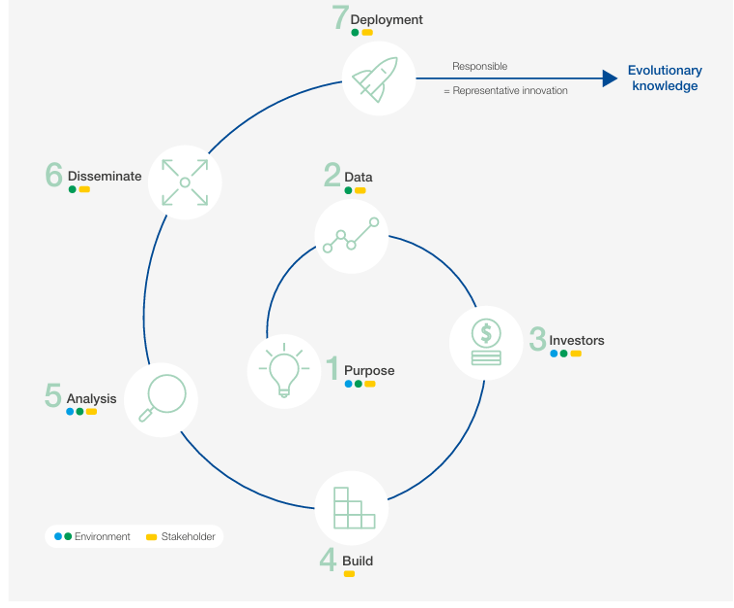
    Around the world, Indigenous communities are already reframing this relationship. A powerful example of Indigenous leadership in AI comes from the work highlighted by the World Economic Forums Blueprint for Equity and Inclusion in Artificial Intelligence Published in 2022. The report draws on concepts developed by Sarah Cole Stratton of the Māori Lab, whose Māori-informed framework reframes the AI life cycle through Whakapapa (interconnection), Whanaungatanga (relational responsibility), and Kaitiakitanga (guardianship). Stratton was a one of the lead contributors to the WEC blueprint, where her Representative, Responsible, Evolutionary AI Life Cycle was spotlighted. Unlike conventional AI lifecycles that spin in closed loops of bias and repetition, Stratton’s model unfolds like a koru, the unfurling Punga fern symbolizing growth, renewal, and continuity [6]

    This Māori-led framing offers a powerful alternative: an AI lifecycle that flows, unfolds, and adapts with each iteration, guided by community knowledge, environmental stewardship and shared governance. This reenvisioned lifecycle reflects broader truth, meaningful innovation is relational, iterative, and accountable, and it grows the way the koru does, always reaching toward responsible expansion.

    The Māori Lab “koru” (Sara Cole Stratton)[7]

    A blueprint for equity and inclusion in artificial intelligence.


    Data sovereignty: OCAP and the CARE principles

    This is where the principle of Indigenous data sovereignty becomes relevant and essential. It is the fundamental rights[8] and regional frameworks seen in the OCAP (Ownership, Control, Access, and Possession) principles in Canada. [9]

    An article written by the International Work Group for Indigenous Affairs (IWGIA), a global human rights organization dedicated to promoting and defending Indigenous Peoples’ rights, mentions[10] that Indigenous Peoples must be the decision-makers around how their data and cultural representations are used in digital systems.[11] In many cases, data collected from Indigenous and marginalized communities are extracted, commodified, and used without consent. Frameworks like the CARE Principles for Indigenous Data Governance (collective benefit, authority to control, responsibility, and ethics)12 remind us that data sovereignty is not just a technical standard, it’s a matter of respect, and self-determination.[12]

    AI obscures this landscape further. AI systems engage massive data sets, most of which are untraceable in origin and often reflect historical and systemic bias. When these models are trained on unexamined data, they stand a very reasonable risk of multiplying and mirroring inequality. Without Indigenous participation and oversight, many have raised concerns that AI has the potential to become what some scholars refer to as data colonialism: the monetization and extraction of language, culture, and knowledge without consent or accountability.[13]

    Indigenous AI in action: Examples from Latin America

    Bridging the digital divide requires structural reforms, such as ethical data practices that respect community consent and autonomy and policies that support inclusive participation and cultural preservation.[14] Some countries have already begun experimenting with Indigenous-led AI initiatives that prioritize cultural preservation and community-led governance.

    For example, a report titled Indigenous People-Centered Artificial Intelligence: Perspectives from Latin America and the Caribbean[15] emphasizes the importance of participatory inclusion, ethical data use, and AI systems rooted in Indigenous knowledge systems.[16] The digitization of Indigenous data must guarantee their right to self-determination and to govern their data, to use them under their values and common interests, the free, prior and informed consent for their collaborative participation, and to ensure their privacy and intellectual property rights”.[17] Some of the examples that include these protocols include:

    • Researchers from the Technological Institute of Oaxaca created an AI-driven app that supported Tu’un Savi language revitalization, offering pronunciation and writing guidance using mobile phone cameras.[18]
    • Researchers in Veracruz used natural language processing to evaluate pronunciation in Indigenous languages, supporting educational access.[19]

    These examples highlight using DEIA values in the container of AI in an inclusive way.

    Reconciliation in the digital age: Canada’s path forward

    While we have been speaking about the AI ethics globally, the conversation about AI in the Canadian context must expand to include Indigenous data governance, and Indigenous sovereignty must be grounded in the TRC’s Calls to Action and the broader context of reconciliation. The conversation between AI and DEIA must be had with DEIA values in mind, and these values include living/lived experience, equity, and critical approaches, which are important when discussing the intersection of AI and DEIA in relation to supporting racialized and marginalized communities. Without intentional design, inclusive policy, and Indigenous leadership, AI risks becoming another tool of assimilation and exclusion.

    With the advent of this new and rapidly emerging technology, as well as the issues that have been brought up globally by the UN and UNESCO, we are forced to critically examine where it leaves us. As we think about the TRC and the Calls to Action, we should ask ourselves whether AI perpetuates the same discriminations for Indigenous Peoples as before. Over the past 10 years, we have been shown that reconciliation is not static; it must evolve in conjunction with shifting social, political, and technological circumstances. And, in the present moment of rapid AI innovation, reconciliation must also contend with the frontier of digital sovereignty and techquity.

    So, when we think about how Indigenous communities are affected by AI and its potential of mirroring harmful and historical patterns of dispossession, it can be scary when there is no control or guidelines that can mitigate these risks of digital exploitation and reinforcement of biases. Techquity allows for AI to be utilized in a container, and thinking about DEIA values, ensures human-centered approaches that can protect Indigenous People’s rights, empowering them as decision-makers and, if they choose to participate, allowing them to engage with the technology on their terms.[20] This approach lays the groundwork for an inclusive AI future, one in which Indigenous communities continue to shape the technologies in ways that honor their knowledge, autonomy, and rights.

  • Care over convenience: Centering DEIA in everyday choices

    Care over convenience: Centering DEIA in everyday choices

    Making meaningful choices amid chaos 

    In recent years, I’ve focused my work on putting people and our planet first. Whether it’s guiding companies through B Corp certification or supporting diversity, equity, inclusion, and accessibility (DEIA) initiatives, I’ve seen firsthand how everyday choices can add up. 

    At home, putting my values into action feels more complicated. Parenting adds a whole new level of chaos. Between juggling time, tight budgets, and temper tantrums, every decision feels more tangled and personal, and I often question if my small actions really make a difference. 

    It started with a birthday party 

    For my son’s sixth birthday, I set out to throw him the ultimate Sonic the Hedgehog celebration. I went straight to the party store and loaded up on themed decorations, shiny balloons, and favors; everything I thought would make the day magical. 

    But somewhere between the floor-to-ceiling aisles of shiny decor and the checkout line, I froze. My cart was overflowing, and so was my guilt. 

    This wasn’t the first time I’d felt that tension: the pressure to pull off a Pinterest-worthy moment clashing with the voice in my head whispering, who is this for? 

    When the easy path isn’t the right one 

    I saw at that moment what I’d been trying not to: the uncomfortable, inconvenient thoughts I usually pushed aside. I wanted to create a special day for my son, but I knew everything in my cart would likely end up in the trash by the next morning.  

    Still, the pressure was real, especially as a parent. It’s easy to compare and feel like we’re falling short. We’re bombarded with images of curated “perfection”: balloon arches, custom cakes, and themed snack tables. The message is loud and clear: More is better. And if you skip the loot bags? Cue the mom guilt.


    The real cost of convenience 

    Feeling overwhelmed, I emptied my cart and left the store with only a few paper balloons. I didn’t have a plan, just a terrible feeling in my gut I couldn’t ignore. 

    From there, I started exploring more sustainable options for my son’s party and asking deeper questions about who might be carrying the cost of my everyday choices. The more I uncovered, the more uneasy I felt.  

    Climate change, pollution, and toxic waste aren’t abstract problems. They land heaviest in the places and communities that have been overlooked for years. Places where people were already fighting to be seen and heard. 

    Not everyone experiences “the environment” the same way. I started noticing that zero-waste choices, the kind of things we often hear about, aren’t really an option for many people. Often, those conversations come from places of privilege – people with time, money, and access. Meanwhile, the people facing the harshest effects of environmental harm usually have the least power and resources. 

    Facing the hidden impacts, often paid in dignity, labor, land, or wellbeing, meant confronting my habits rooted in convenience and privilege. And that was the hardest part: choosing to keep learning, even when it was uncomfortable, and making space for humility and choices that felt more aligned with my values. 

    Why DEIA drives sustainability 

    At first, I thought sustainability was mostly about stuff: what we buy, what we throw away, and what we recycle. But over time, that view started to feel too narrow and too simple. 

    When I started paying closer attention, I could see how the impact of my choices reached far beyond my home. The things that make life easier for me often come with a price that others end up paying. That cost might show up in: 

    • unsafe working conditions 
    • polluted neighborhoods 
    • limited access to clean water and air 

    It’s not evenly shared, and it doesn’t show up on a receipt. 

    To take care of the environment, we need to take care of each other. When we put equity, inclusion, and accessibility front and center, we come up with ideas that work for more people and stand the test of time. Without it, we’re just repeating the same broken systems, only this time with reusable tote bags.

    Leaning into intention 

    Do I still get it wrong? Absolutely. There are days when convenience wins, and I forget to ask better questions. But I’m learning to pause and choose more intentionally whenever I can, grounding myself in these questions: 

    • Who is connected to this choice? 
    • Who benefits? 
    • Who might be left out? 

    Every choice we make says something about what matters to us. And even small, imperfect actions can build momentum when we stay curious, open, and willing to keep learning. 

    A future worth celebrating 

    For me, everything came into focus in aisle five; and since then, it’s grown into a new way of seeing, choosing, and showing up. 

    And you know what? My son had the best birthday. 

    We gifted reusable Sonic the Hedgehog mugs from a local sustainable shop instead of the usual plastic loot bags, and he proudly explained why it was better for the planet as he handed them out to his friends. The decorations (or lack of them)? He didn’t even notice. He was too busy having fun. 

    I’m still figuring it out. I don’t have all the answers. My kids keep reminding me that being present is way more important than making everything look perfect, and that teaching them to be part of the solution starts with how I show up. 

    For me, sustainability is more than the choices I make. It’s about being willing to see the impact of those choices and staying curious enough to keep learning and growing, even when it feels uncomfortable or messy. 

    So, what will your next choice say about the world you want to create? 

  • Calling all allies: sharing and learning from CCDI queer professionals

    Calling all allies: sharing and learning from CCDI queer professionals

    By Anthony Lombardi, Iván Barradas, MacKenzie Pudwell, and Viktória Belle 

    In recent months, Canada, long regarded as a progressive and inclusive nation, has witnessed a disturbing rise in threats and hostile actions directed towards 2SLGBTQIA+ communities. Despite legal protections and social advancements, individuals identifying as part of this diverse collective continue to face increasing aggressions, violence, and discrimination. From alarming instances of hate crimes to the amplification of anti-2SLGBTQIA+ rhetoric in media and political discourse, the safety and well-being of many Canadians are under growing threat.  

    To raise awareness of this challenging reality, CCDI has formulated the following question to four members of our staff who identify themselves as queer persons: 

    Considering the rising threats to DEIA efforts in our country, what is your personal and professional contribution to help building safety and inclusion for other 2SLGBTQIA+ persons in Canadian workplaces? 

    Here are their answers. 

    ___ 

    Anthony Lombardi (he,him) 


    Growing up gay, the fear of being found out followed me everywhere I went and seeped into everything I did. Now, as a secure and confident gay man, that fear no longer haunts me. However, I recognize that the depth of the shame I carried for two decades determined the direction that my life would take, and it informed how I would get there. It was at the root of my decision to do everything I could so that others who live in similar shame would find the support needed to overcome the barriers that inhibit the expression of their true self. I had decided that anything less than authentic was just not good enough.   

    The journey of my activism started with volunteering a few evenings a month at a help and information phone line for those grappling with their sexual and/or gender identity. It was heartbreaking to know that there were so many people out there who still had not come to the realization I had come to – that they were just as worthy of love and respect as everyone else.   

    Outside of my volunteer hours, I began speaking freely about gender and sexual inclusion because even though people around me were not struggling with their identity, their ability to understand certain issues that were distant from their own reality greatly influenced their world view – one that may not have recognized the need for the safe spaces I was trying hard to create. 

    Now, another two decades later, I am working at the Canadian Center for Diversity and Inclusion with organizations dedicated to creating safe workplaces. Once I turn off my computer at the end of the day or on a Friday afternoon, I step back into a world where my meetings and projects may be invisible, but the threats to inclusion continue to wreak havoc. So, if I truly want there to be safe spaces for the diversity that surrounds all of us, I must understand that this mission is not one that I can simply relegate to the confines of a 40-hour work week or the occasional volunteering opportunity. I must weave this effort into both the professional and personal spheres of my life, through empathy-building, awareness raising, education, and active listening. 

    I have worked hard so that I would not be forever scarred by the shame that enslaved my identity for 20 years. It is impossible to understand the feeling of such heavy shame when your existence is not under constant opposition. I argue that it is not even necessary to really understand it. What indeed is necessary is the collective act of sharing our spaces without casting onto each other the burdenous obligation to justify one’s existence in it. This practice is something that I speak about with my teams at work, with my friends, and with my family. I do so because I believe that honest and healthy conversation raises our awareness of where we can do better and be better. 

    I thank you for joining me on this journey to building a safer space for us all. — Anthony  

    ___ 

    Iván Barradas (he,him) 


    As a DEIA educator and a person belonging to the 2SLGBTQIA+ collectives in Canadawith a particular devotion and a professional background rooted in the fields of adult teaching and modern languages, it is indispensable for me to use (and promote the usage of) the most adequate and updated terminology when referring to other folks who identify themselves as individuals or allies of the 2SLGBTQIA+ communities, and who possess lived or living experience on the matter. 

    Thus, one of my most noteworthy contributions has been the collaboration with the Research Team in the annual review of CCDI’s DEIA Glossary of terms, where I had the opportunity to discuss, amend, and update several entries and definitions for a better understanding of 2SLGBTQIA+ realities in our country. For example, some important notions such as ‘enbyphobia’i, ‘endosex’ii and ‘heterocisnormativity’iii, were added to the glossary, as well as some amendments to the previous definitions of ‘romantic orientation’iv and ‘transness’.v 

    Although such an endeavor is a fascinating way of learning and disseminating knowledge, it must however be noted that it is not precisely an easy task. Sexual orientations, gender identities, and gender expressions are complex, fluid, and constantly changing, and cannot be addressed applying a “rigid” approach. Some terms that were widely used some years ago are no longer valid, while others that were vaguely defined (such as ‘queer’vi) required further research.   

    On the other hand, it is important to acknowledge the fact that having some living experience related to terminology (or interviewing persons who have it) has made a huge difference to correct or clarify the content. Furthermore, navigating the particularities of English and French languages, as well as the distinct perspectives that some entries have – according to Indigenous Peoples, Francophone communities, English-speaking researchers, and Allophone groups – has made this experience totally rewarding. 

    To all those 2SLGBTQIA+ folks living in a state of distress in Canada, I send tons of courage. —Iván  

    ___ 

    MacKenzie Pudwell (she,her) 


    DEIA is currently receiving a new wave of resistance backlash and is being targeted by anti-rhetoric. It is essential in this turbulent time to actively create safe spaces in the workplace and society for equity-deserving groups. This very much includes 2SLGBTQIA+ communities, whose rights, protections, and access to resources are being challenged—not just in the U.S., but here in Canada as well.  

    As a queer professional, I’ve encountered, assumptions, tokenization, and barriers to inclusion based on my identity and my community. While I have endured homophobia and sexism, I recognize that I am a queer, White, cis woman and that my experience is not representative of all 2SLGBTQIA+ folks. The diversity within our community is beautiful and complex, but I acknowledge my limitations and still choose to show up and support my community.  

    Professionally, I try to support the development of queer-inclusive content and leverage learning about all 2SLGBTQIA+ identities, issues, and experiences to expand my knowledge. Ultimately, I try to create awareness around the socio-political influences in Canada that are negatively impacting our community. To get a clear picture of what’s going on in your regions, I invite you to connect with your local 2SLGBTQIA+ groups today. From proposed book bans, limiting health care access to outing policies, you might be sadly surprised.   

    Personally, I had the immense honour of marrying my now amazing wife this year. Every step of planning became an opportunity to educate and challenge assumptions within the wedding industry. Sometimes, we were pleasantly surprised – shoutout to our photographers for their inclusive approach. Other times, we had to pause and offer alternatives, suggest more inclusive language, or point out problematic practices. Many vendors received this feedback openly and made changes. Others didn’t, which was disappointing, but a sign that our values didn’t align.  

    We wanted our wedding to connect with our local 2SLGBTQIA+ Alberta community. So instead of gifts, we asked people to donate to the Skipping Stone Foundation, a local charity supporting young trans and non-binary folks, who are being particularly targeted politically in Alberta. Some of our family hesitated, worried it might make others uncomfortable, and we responded, “If this is their line, then it probably means they aren’t meant to celebrate our love and the beautiful community to which we belong.” 

    Inclusion isn’t a one-time donation, policy, or gesture. It’s a daily commitment, made up of actions, missteps, learning moments, and intentional efforts in all areas of our lives. Building safe, inclusive spaces is ongoing work, and I’m committed to continuing that work alongside all of you.  

    I look forward to our journey. — MacKenzie  

    ___ 

    Viktória Belle (she,they) 


    Audre Lorde reminds us that “revolution is not a one-time event.vii When I think of revolution, I think of the 2SLGBTQIA+ community and how we all continue to build small and large revolutions every day around the world. 2SLGBTQIA+ people have always existed and will always exist, which means there is a rich legacy to learn from and follow. 

    Personally and professionally, I work to prioritize opportunities for safety and empowerment, amplifying the voices and teachings of 2SLGBTQIA+ people in my daily life and work. This can sometimes happen by speaking up when discrimination, misgendering, or exclusionary acts are happening in real time. It can look like: prioritizing naming injustice in relationships or in workplace structures, when it is safe to do so; asking someone to consider humanity and humility, despite the rise of hate through education; or offering resources and holding space. Often, we spend so much time talking about safety, how to stay safe, how to be safe, how to keep each other safe, that it takes up so much space and time in the lives of many 2SLGBTQIA+ people. Celebrating our joy and humanity is an act of resistance and a small, quiet revolution in itself. And allies can play a huge role in sharing some of that good and hard work of education and holding space.  

    In Canada and all over the world, the rise of identity-based threats and hate tears communities apart and costs our people their dignity and lives. I hope everyone out there feels some sort of responsibility to show up for 2SLGBTQIA+ communities in and out of your workplace, offer your kindness and humanity, and let someone know they matter. Now more than ever, collective care and solidarity are vital. I’m inspired every single day by my wife and partner, my family and friends, my comrades and colleagues, who continue to amplify our diverse voices, dispel misinformation, and risk their lives for the sake of ALL our collective liberation.  

    Thank you all so much. —Viktoria 

    ___ 

    If you are in Canada and experiencing distress or harm due to rising threats against the 2SLGBTQIA+ communities, please know that you are not alone. You can contact the following services for free and confidential support: 

    Egale – Canada’s leading organization for 2SLGBTQI people and issues. They improve and save lives through research, education, awareness, and by advocating for human rights and equality in Canada and around the world. Available in English and French. 

    Interligne – 24-hr help and information line for LGBTQ+ people, their loved ones, and professionals from various background (accessible throughout Canada and the Francophonie worldwide). Available in English and French. 

    It Gets Better Canada – Envisions a day when no young person in Canada feels marginalized, isolated, excluded or rejected because of their sexual orientation, gender identity, and gender expression. Available in English and French. 

    HPV Global Action – For inclusive information about general sexual and reproductive health. Also delivers inclusive presentations to schools and academic institutions. Available in English and French. 

    Aide aux Trans du Québec – Support and demystification of trans and non-binary identities. Available in English and French. 

    The LGBT+ Family Coalition – Advocacy and support for non-traditional families. Available in English and French. 

  • Understanding the differences between Canadian multiculturalism, cultural plurality and interculturalism

    Understanding the differences between Canadian multiculturalism, cultural plurality and interculturalism

    In 2002, the Canadian government designated June 27 as Canadian Multiculturalism Day, “a celebration of the contributions of Canada’s diverse people to Canadian society”.[i] It is a day set aside to recognize and celebrate the rich diversity of cultures that exist within Canada, also serving as an opportunity to acknowledge the valuable contributions that various cultural communities have made to Canadian society.

    Although the clarity of the concept of multiculturalism is remarkable, as well as its understanding by the majority of the Canadian population, in my professional practice as a DEIA educator, I have noticed on several occasions that this term presents certain confusion, specifically, with respect to the use of the terms ‘cultural plurality’ (also known as ‘pluriculturalism’), and ‘interculturalism’ (as the latter has been applied in Quebec). Thus, the purpose of this blog is to clarify the use and pertinence of these three concepts, which are essential to understand the diversity of opinions and the socio-historical and cultural divergences in Canada.

    Let’s take it one term at a time.

    Multiculturalism (in a broad sense) is the coexistence of multiple cultures and ethnicities within a society. But in Canada, it is more than that. It is a federal policy (and this word is key!) established in 1971 “to preserve individual cultural freedom and recognize the contributions of diverse ethnic groups”.[ii] Said policy was amended several times and was later incorporated into a law in 1988. Thus, from then on, the Canadian Multiculturalism Act recognized the cultural diversity of all Canadians, “as regards race, national or ethnic origin, colour and religion as a fundamental characteristic of Canadian society”.[iii]

    It is also important to mention that this law highlights the importance of the Official Languages Act, the Citizenship Act, and the Canadian Human Rights Act, three regulations that are paramount to understand the characteristics of multiculturalism in Canada. This can be justified by the social, demographic, and cultural context of the period when the Act came into effect. By 1988, the racially-biased restrictions applied to the immigration policy since the 1960s and 70s had been removed and, as a result, Canada had seen significant migration from eastern Asia, Africa, the Caribbean, the Middle East and South America – especially in the large urban areas of Toronto, Vancouver, Calgary and Montreal.

    These communities started to express a growing need to recognize their cultural backgrounds through concrete measures of social cohesion that could show their integration to the dominant ethnic group. Also, in 1988 Canadian population was about 26.5 million, and some concerns of an aging population were starting to emerge, at a time when the economy was recuperating from the major recession that had occurred in the early 1980s.

    In short, these are the reasons – and the context – why Canadian multiculturalism encourages all individuals to maintain their cultural identity, festivities, traditions, languages, and practices, promotes inclusion without demanding full cultural conformity and is rooted in a multifaceted model, where many cultural identities coexist.

    One of the many examples of multiculturalism in Canada is the African Descent Festival, held annually in Vancouver. It aims to rejuvenate the heritage for the people of African Descent in Vancouver Downtown, British Columbia and Canada and, in doing so, aligns with Canada’s multiculturalism policy by celebrating cultural distinctiveness within a broader Canadian context, without requiring cultural blending.

    Let’s now talk about ‘Cultural plurality.’

    ‘Cultural plurality’ – or ‘pluriculturalism’ – is the presence of multiple distinct communities within a society.[iv] In this regard, it is equivalent to multiculturalism. However, cultural plurality does not necessarily imply active policies that promote or celebrate diversity and inclusion. It does not translate into state-endorsed policies or the active support of cultural differences. On the contrary, it possesses a simple and descriptive approach, oriented to recognize the fact that multiple cultures coexist, but without the same structured integration and official recognition that multiculturalism advocates.

    An example of pluriculturalism in Canada would be a second-generation immigrant navigating school and home cultures. More specifically, a ‘Mexicanadian’ student in Halifax who speaks English at school, Spanish at home, and celebrates both Canadian holidays (e.g., Canada Day) and Mexican traditions (e.g., Day of the Dead). In doing so, the student moves between multiple cultural spheres and integrates aspects of both, so their cultural identity is not fixed in one community but fluid, depending on social context.

    So, at this point, you might be wondering:

    What’s the utility of understanding the meaning of ‘pluriculturalism’ and using it on a regular basis (especially working in the DEIA space), if we live in Canada, a country recognized by its laudable policy of multiculturalism, where we all celebrate the diversity of cultures and the equity of conditions to express ourselves, regardless of our national origin and communities of affiliation?

    Multiculturalism seems to be a panacea for several countries with a multiethnic and multilingual composition, a harmonious history and common values, but it’s not.

    As a matter of fact, multiculturalism has its limitations too.

    In a plurinational country like Canada, there exist several historical nations (i.e. Indigenous nations, la nation Québécoise), as well as countless national and transnational identities (where many persons develop belongingness to distinct communities they feel part of). Using the term ‘multiculturalism’ to circumscribe the complexity of Canadian social challenges in 2025 can therefore be inaccurate and reductive.

    Although it is true that multiculturalism celebrates the diversity of cultures, it does not promote mutual understanding among them, leading to the creation of cultural enclaves that remain isolated from broader society. In addition to that, it overlooks and minimizes the voices of several equity-deserving groups (such as Indigenous Peoples, racialized persons, and immigrants) whose struggles are rooted more in colonialism, displacement, and economic exploitation than in cultural appreciation. Multiculturalism might be considered as a barrier to reaffirm a distinct national identity, secure language protection, and strengthen secular values. Such is the case of Quebec.

    Interestingly, after doing a quick check with other six DEIA colleagues (practitioners and educators) living in four different provinces of Canada, we all agree that the term ‘cultural plurality’ is more accurate when it comes to describe the society in which we live.

    And here is when our third useful term emerges: ‘Interculturalism’ (as understood and applied in the province of Quebec).

    Interculturalism is an approach to address cultural diversity in Quebec. It was firstly introduced by the provincial government as a reaction to the federal policy of multiculturalism (1971), and then gained support from academia, community spokespersons, and some artists (all of them living in the province). It emerged as a concept in the early 1980s, and since then, its characteristics have been clarified. Here are some of its key points:[v]

    • It values cultural diversity (such as multiculturalism does) but also emphasizes the need for integration and dialogue between ethnocultural groups, which are known as ‘cultural communities’ in the province.
    • It encourages permanent communication, interaction, and exchange between cultural communities rather than just coexistence.
    • It affirms the primacy of the host culture as a unifying force. This means the dominance of the French-Canadian culture of Quebec, as well as its language.

    Even though interculturalism is a model that has guided policy and discourse in Quebec for more than 40 years, it is important to mention that it has never formally been enshrined in law. Despite that, their directives have been uninterruptedly applied by the provincial authorities. In May 2025, however, the National Assembly of Quebec passed bill 84, Loi sur l’intégration à la nation québécoise, which aims to foster the vitality and preservation of Québec culture as the common culture and vector for social cohesion.[vi]

    An example of interculturalism in Quebec is the provincial approach to immigrant integration, particularly through Bill 101 (Charter of the French Language), and Bill 96 (An Act respecting French, the official and common language of Quebec), which mandate French as the language of education and public life. In agreement with this approach, the government of Quebec encourages cultural exchange and immigrant integration, but around a central framework: the French language and culture.

    Understanding the differences of ‘multiculturalism’, ‘pluriculturalism’ and ‘interculturalism’ is important because each concept reflects different approaches to diversity, identity, and social integration, which directly influence policies, community relations, and the lived experiences of individuals and equity-deserving groups in Canada.

    Personally, I consider it not only beneficial but essential to clarify the dimensions of these terms as an example of the great divergence of opinions that converge in our society. These distinctions may seem complex (and they are), but at the same time, they demonstrate the high level of freedom of everyone’s ideas in a country where respect still prevails and where consensus is essential to reach agreements that allow the development of our cultural diversity.

    Tags CDNdiversity CCDI Diversity Inclusion Equity Accessibility DEI DEIA IDEA Canadian Centre for Diversity and Inclusion

    Recent Posts

    Understanding the differences between Canadian multiculturalism, cultural plurality and interculturalism

    What we carry after bearing witness: Reflections on visiting the Auschwitz exhibition at the ROM

    A Francophile in the Francophonie

    A tribute to Canada and its role in the resettlement of Vietnamese refugees

    Waves of difference: A personal reflection on racial discrimination and the ocean’s lessons

    Gender in science and STEM: Possibilities for shifting perspectives

    Aging beyond stereotypes: Shaping a new story for the third act

    Latin American Heritage Month: An interview with Bibiana Pulido

  • What we carry after bearing witness: Reflections on visiting the Auschwitz exhibition at the ROM

    May is Jewish Heritage Month in Canada – a time to honour Jewish culture, history, and resilience. It’s also a time to reflect on the unthinkable chapters that shaped the 20th century – and to understand what they ask of us today.

    A few of us from CCDI recently visited the Royal Ontario Museum’s exhibition, Auschwitz: Not long ago. Not far away. We went in knowing it would be difficult. What we may not have been prepared for was how deeply we were moved, and how much it would reveal about the present moment in which we’re living.

    In the days since our visit, we took some time to debrief as a staff. What stayed long after we left the exhibit wasn’t the history – it was how human it all was. How deeply personal. The stories weren’t distant or abstract. They were tactile and intimate.

    “What stood out for me was the humanization of the exhibit,” Josephine Njoh, Director of Partner Relations, CCDI. “A lot of times, we hear about events that have happened in history and as catastrophic as they are, they’re not individualized and personalized. Hearing individual stories, seeing clothing, shoes, really brought home that these are individuals. These were people with families and names and careers, and we can all relate to that.”

    This rang deafeningly true throughout the exhibit. You move past letters, photographs, everyday objects – a child’s shoe, a worn suitcase – and you begin to grasp the scale of loss through the smallest of details. The banality of it is chilling: the train timetables, the uniforms, the files. The genocide didn’t begin in the camps. It began with bureaucracy, with borders, with silence.

    “One of the rooms had a door from a gas chamber at Auschwitz,” Rosiane Torres, Events Coordinator, CCDI. “And there was a note saying the workers who manufactured it were proud to support the great Germany. I thought maybe society at the time didn’t really know what was happening. But no – many of them did. And they supported it. It reminded me that even today, many organizations benefit from systems of violence. There are echoes of this everywhere.”

    In our work, we often talk about systems – how they’re built, who they serve, who they erase. But seeing it laid bare in that exhibition made it harder to talk about systems as something abstract. This was not a lesson in history. It was a confrontation with complicity. It was a mirror.

    “This exhibition was an incredibly rich learning opportunity,” Annika Fenton, Business Development Manager, CCDI, said. “I’ve attended many Holocaust education events before, but this one stood out in how it laid bare the horrors of the tragedy without embellishment. It let the grotesque facts speak for themselves. The context was incredibly informative, and deeply heart-wrenching.”

    Since the visit, we’ve talked about how the experience made us reflect on our present-day—on who is being detained, deported, surveilled, or left to perish under the weight of policy. We talked about how the language of “order” and “justice” is still used to justify cruelty. And we asked ourselves: what does “never again” really mean if we look away now?

    This exhibit doesn’t offer easy closure. It doesn’t tie things up neatly. It leaves you sitting with discomfort, with grief, with questions. But it also leaves you with clarity.

    Jewish Heritage Month is not only a time for memory. It is a time for moral clarity. For courage. For action.

    If you are in or near Toronto, please make time to visit Auschwitz: Not long ago. Not far away. before it closes on September 1, 2025. Go with someone. Talk about it after. Let it challenge you. Let it change you.

    Because remembrance alone is not enough.
    We must respond. We must resist.

    Tags CDNdiversity CCDI Diversity Inclusion Equity Accessibility DEI DEIA IDEA Canadian Centre for Diversity and Inclusion

    Recent Posts

    Understanding the differences between Canadian multiculturalism, cultural plurality and interculturalism

    What we carry after bearing witness: Reflections on visiting the Auschwitz exhibition at the ROM

    A Francophile in the Francophonie

    A tribute to Canada and its role in the resettlement of Vietnamese refugees

    Waves of difference: A personal reflection on racial discrimination and the ocean’s lessons

    Gender in science and STEM: Possibilities for shifting perspectives

    Aging beyond stereotypes: Shaping a new story for the third act

    Latin American Heritage Month: An interview with Bibiana Pulido

  • A Francophile in the Francophonie

    A Francophile in the Francophonie

    May 21 is the World Day for Cultural Diversity for Dialogue and Development, a UNESCO initiative focused towards protecting the diversity of cultural expressions of all the ethnic and linguistic peoples without distinction. When talking about language diversity in Canada, my thoughts tend to be drawn towards our two official languages and our many diverse Francophone communities across the country who work to preserve and innovate with their language and cultures.

    In spite of this, what I don’t often see included in this discussion is the ways in which French language learners, or Francophiles,[1] contribute to this work. I’ll admit, it hasn’t been until recently that I’ve begun to consider my own contribution to Canada’s linguistic diversity, despite speaking and working in both official languages, simply because I come from an Anglophone home.

    For some context, my French education was through Ontario’s French Immersion program which I started in the first grade and continued right through my studies at the University of Ottawa.[2] Despite being able to speak French from a young age, I’ve never considered myself Francophone. I didn’t grow up speaking French at home or in my community, and for most of my life have only used the language in a classroom, one that was filled for the most part by French speaking Anglophones like me. When it comes to the Francophonie, I’ve spent most of my life feeling like an outsider looking in.

    It wasn’t until my studies at the University of Ottawa that I was truly able to immerse myself in French Canadian cultures, since this was the first time that I studied alongside Francophone students. I remember struggling at first with this, having spent my academic career up to that point surrounded by French language learners like me. I remember leaving my first French lecture with a headache from trying to keep up and going home to learn about the different references made in class that had flown right over my head. But I persevered, and by the end of my degree felt that I had not only improved my French but that I had been given the opportunity and ability to experience cultures at a depth that I wouldn’t otherwise have been able to access.

    For example, I’ve read books written by Haitian and West African authors that haven’t been translated into English. I have watched theatre pieces created by French Canadians and have overall been exposed to different perspectives in being able to attend courses delivered to Francophone students.

    I find having the opportunity to experience cultures in their own language important precisely because language is often such an integral part of a culture that usually loses elements when translated. When pieces are translated, it’s not always just the language that is adjusted – sometimes it’s also the cultural context through which certain things are communicated. This can be in altering certain phrases or gestures which simply don’t translate because there is no cultural context behind them in the language into which it is being translated. Certain elements can be altered to prioritize comprehension above the transfer of cultural elements. This is why we so often hear that something was ‘lost in translation’.

    Experiencing different cultures in their own language means that I am able to catch those nuances. As a result, I learn more about the culture and history behind them as I try to understand not just what is communicated, but why and how those elements came to be. Doing so has helped to fuel my own curiosity – not only about different cultures, but also different people, perspectives, and experiences. It has also helped to foster my own humility and respect when faced with those same things. There is always a different perspective or experience from which to learn.

    I’ve come to realize that I’m not really an outsider looking into the Francophonie. Thinking back, the French Immersion program allowed students to develop our own collective identity through shared experiences as Francophiles. Just because we didn’t speak French at home doesn’t mean that we don’t have our own place in the Francophonie or that we don’t contribute to it. The only requirement is to live in the world speaking French.

    The French-speaking world is filled with a large range of cultures, traditions, dialects, and experiences, and that my own experiences and that of my fellow Francophiles not only have a place in the Francophonie but make valuable contributions to it. In fact, the efforts of Francophiles in striving to live at least partially in French help to ensure the continuation of the various rich Francophone heritages in Canada.[3]

    The lessons that I’ve learned as a life-long Francophile have helped to bring me to DEIA work in a couple different ways. While trying to navigate spaces using my second language has provided me with empathy and patience for other people doing the same, this experience has helped me to appreciate the broad diversity of identities and experiences around me and helped me to develop a sense of humility when faced with ideas that differ from my own.

    There is not simply one way to be a part of or to come to any given community, and my experiences as a Francophile have helped me to understand the immense value of bringing together different perspectives and ways of thinking. My journey as a student of both French language and cultures, from feeling like an outsider looking in to recognizing that I occupy my own space within the Francophonie, has also helped bring me to this work.

    In reflecting on the ways in which Francophiles are often left out of the conversation and the many ways in which people can become a part of the French-speaking world, I’ve found myself asking: who else is left out of conversations and celebrations surrounding the communities to which they belong? This World Day for Cultural Diversity for Dialogue and Development offers a reminder to consider how we can bring those who are often excluded into our conversations and recognize their belonging and contribution to their communities, no matter what their journey was like to get there. Such questions deserve a deeper reflection… What do you think?

    Tags CDNdiversity CCDI Diversity Inclusion Equity Accessibility DEI DEIA IDEA Canadian Centre for Diversity and Inclusion

    Recent Posts

    Understanding the differences between Canadian multiculturalism, cultural plurality and interculturalism

    What we carry after bearing witness: Reflections on visiting the Auschwitz exhibition at the ROM

    A Francophile in the Francophonie

    A tribute to Canada and its role in the resettlement of Vietnamese refugees

    Waves of difference: A personal reflection on racial discrimination and the ocean’s lessons

    Gender in science and STEM: Possibilities for shifting perspectives

    Aging beyond stereotypes: Shaping a new story for the third act

    Latin American Heritage Month: An interview with Bibiana Pulido

  • A tribute to Canada and its role in the resettlement of Vietnamese refugees

    In moments of crisis, we must remember the strength and unity that define us. As Canadian sovereignty and freedom are under attack, we can draw courage and inspiration from our rich history and the powerful stories that have shaped our identity. Embracing the lessons of the past helps us to forge a future that is brighter, more compassionate, and inclusive for all.

    One of these powerful lessons is Canada’s role on the global stage as a place of refuge for those fleeing persecution. April 30, 2025, marks the 50th anniversary of the end of the Vietnam War. Also known as “the Fall of Saigon”, this date has forever etched my mind – and the minds of many Vietnamese – with feelings of loss, gratitude, and hope[i].

    Throughout history, my ancestors, family, friends, and other Vietnamese community members have faced immense challenges, from enduring a series of wars and forced displacements, to overcoming the harsh realities of colonization and imperialism. On April 30, 1975, the last American planes and helicopters left Saigon, stranding many as the North Vietnamese communist regime took control of South Vietnam. This marked the start of a challenging era. Under the new government, people faced harsh conditions, as their land and businesses were seized and as officials placed intellectuals, soldiers, leaders, and activists in “re-education” camps marked by forced labour, illness, and death[ii]. Families were separated, property was stolen, and democracy was lost.

    In the aftermath, in search of freedom and human rights, I heard endless stories of brave individuals and their families who embarked on perilous journeys, selling their gold and belongings for a rare seat on an overcrowded fishing boat, fleeing their homeland in the middle of the night with nothing but the clothes on their backs. These were known as the “Boat People.” Between 1975 and 1995, approximately 800,000 to 1 million Vietnamese fled the country[iii]. Their journeys were fraught with danger, pirate attacks, starvation, and death. They sought refuge in overcrowded camps across Southeast Asia in Malaysia, Thailand, Hong Kong, Indonesia, and the Philippines.

    The world watched in horror. With an urgent call to action from the United Nations, Western nations took collective action[iv]. Canada was one of the countries that heeded the call and played a significant role in addressing this crisis. Between 1979 and 1985, Canada accepted about 110,000 refugees.

    The resettlement of refugees was made possible by the tireless efforts of Canadians who felt compelled to help, fueled by the Government of Canada’s establishment of the Private Sponsorship Program (PSR) in 1979. The Canadian government pledged to sponsor one refugee for each refugee that the Canadian public would support privately[v]. This approach gave a tool for ordinary citizens to become directly involved in resettling refugees. Ethnic groups, faith communities, neighbors, families, and other benevolent associations mobilized to raise funds and provided support for the sponsored individuals or families during their first year in Canada. The PSR program has since become a model for other countries around the world, demonstrating how private citizens can play a crucial role in refugee resettlement.

    Our nation’s compassionate response was so inspiring that Canada was recognized internationally, earning the Nansen Refugee Award from the United Nations High Commissioner for Refugees in 1986. This was the first—and remains the only—instance of a country being bestowed this prestigious award for their aid to refugees[vi].

    In 2015, the Journey to Freedom Day Act was approved in the Canadian government and received royal assent. This Act commemorates the exodus of Vietnamese refugees following the Fall of Saigon on April 30, 1975, and their acceptance in Canada[vii]. In 2022, after several years of community fundraising, the Calgary Vietnamese Canadian Association, in collaboration with community supporters and partners, unveiled the new Journey to Freedom Park. Designed in the shape of a boat, with a flower bed at its centre symbolizing the map of Vietnam, the park is situated at the entrance of International Avenue, with views of the river valley and downtown Calgary, offering symbolic reminders of the distance Vietnamese refugees traveled to create new lives. The park’s design was a collaboration between CVCA, local Vietnamese artist T.B. Tran, and First Nations representatives. It showcases a monument dedicated to the Vietnamese boat people and their journey to Canada as well as memorial walls highlighting the journey, the sponsors and all those who contributed to the re-settlement of Vietnamese refugees to Canada[viii]. This park serves as a reminder of the sacrifices made and the resilience of the Vietnamese people. It also symbolizes the gratitude of the Vietnamese community towards Canada for providing them with a new home.

    Over the past years, two of the most notable individuals who made a profound impact on me and my community were Ottawa Mayor Marion Dewar and Dr. Howard Adelman:

    • Mayor Marion Dewar launched “Project 4000” in 1979, a groundbreaking initiative to mobilize citizens of Ottawa to sponsor and support 4,000 Vietnamese boat people[ix].
    • Canadian academic and humanitarian Dr. Howard Adelman, founder of “Operation Lifeline,” led the largest operation that resulted in the rapid establishment of 66 chapters across Canada within eight days to mobilize private sponsorships[x].

    When our Vietnamese community invited them to Calgary to honour their immense contributions, they shared their story with our youth, parents, and community builders. Their motivation to help the Vietnamese refugees was both simple and profound: a vision rooted in the deep conviction that we must live in a world where compassion extends to all of humanity, beyond borders. They believed there should be no division between “us” and “them,” and that it is our shared duty to offer support to those in need whenever possible. I emerged from these heartfelt conversations with a renewed commitment to pay it forward, determined to help humans, regardless of their dimensions of diversity and life circumstances, to discover their peace, access their opportunities, and embrace the joy of making a life and a living free from oppression and exclusion.

    Additional efforts to preserve the narratives of the Boat People are showcased on the Hearts of Freedom website[xi] and through compelling film documentaries[xii]. Locally, the Calgary Vietnamese Youth Association is gathering stories from three generations in our community, dedicated to documenting and archiving our shared journey during this 50th anniversary year[xiii].

    Over the years, the legacy of Canadians of Vietnamese heritage continues to flourish as new generations emerge, forging their identities and sense of belonging on Turtle Island. Their contributions are vast and impactful, from contributing to the economy in a myriad of professions, to building social inclusion by sponsoring refugees from Syria and Kosovo, fundraising for wildfire relief in Alberta, and crafting masks for frontline workers during the pandemic when vaccines and masks were scarce. Despite the historical adversities faced by our community, our spirit, like that of so many other immigrant and refugee communities throughout Canada, remains strong and resilient.

    As Ryunosuke Satoro once said, “Individually, we are one drop. Together, we are an ocean.”[xiv] I have no doubt that ordinary people can do extraordinary things under a compelling vision. Thank you, Canada, for mobilizing and showing your leadership and humanitarian compassion in this chapter of our history. Such good lessons remind us to stay strong, inspire collective action during hard times, and pave the way for a future filled with hope, unity, and compassion.

    Tags CDNdiversity CCDI Diversity Inclusion Equity Accessibility DEI DEIA IDEA Canadian Centre for Diversity and Inclusion

    Recent Posts

    Understanding the differences between Canadian multiculturalism, cultural plurality and interculturalism

    What we carry after bearing witness: Reflections on visiting the Auschwitz exhibition at the ROM

    A Francophile in the Francophonie

    A tribute to Canada and its role in the resettlement of Vietnamese refugees

    Waves of difference: A personal reflection on racial discrimination and the ocean’s lessons

    Gender in science and STEM: Possibilities for shifting perspectives

    Aging beyond stereotypes: Shaping a new story for the third act

    Latin American Heritage Month: An interview with Bibiana Pulido