Author: Veronica Wang

  • Learning to see beyond 

    Learning to see beyond 

    Written by Rayhan Azmat, CCDI UnConference 2026 keynote speaker 


    I see a shift in perception happen most clearly when people encounter my story for the first time. By the end of the conversation, they are often surprised by how much their original assumptions have changed. 

    That quiet recalibration is what this is really about. 

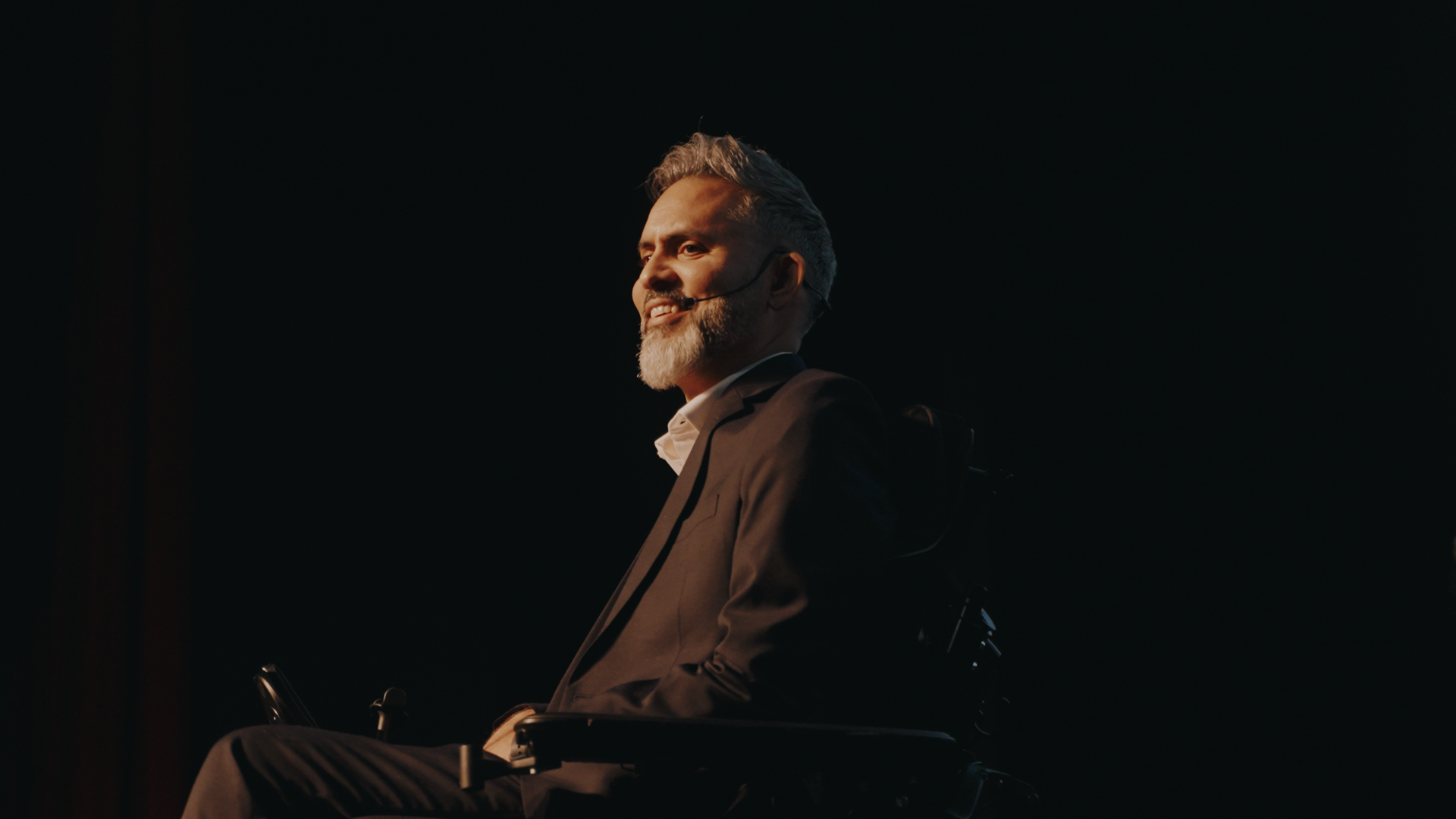
    At the beginning of a keynote, people see what is immediately visible. A wheelchair. A narrative that feels familiar before a single word is spoken. But as the story unfolds, something changes. What people respond to is not inspiration in the abstract. It is recognition. The realization that what they thought they understood at first glance was incomplete. 

    Not because the facts changed. 

    But because the story widened. 

    That shift feels immediate to the audience. 

    Living it was different. 

    It began much earlier, more than two decades ago, with a rare muscle condition that forced me to adapt long before I had language for what I was doing. Day by day, I learned how to work around limitations and keep going, even when the future felt uncertain. 

    For a long time, adapting was simply part of daily life. It was not something I framed as resilience or strength. It was just what was required. Plans shifted. Approaches adjusted. Progress came through consistency rather than certainty.  

    Only much later did I understand how formative that experience had been. 


    Perspective under pressure 

    Like so many organizations, the first months of the pandemic collapsed certainty overnight. Revenue disappeared. Operations shut down. Long-range plans became obsolete almost instantly. The only thing everyone knew was that the old playbooks no longer applied. 

    As the leader responsible for financial planning, my role was not simply to react. It was to help the organization see a path forward when no clear one existed. That meant building scenarios in real time. Revising budgets repeatedly. Communicating uncomfortable truths clearly and calmly. Sitting in rooms with senior leaders, not to predict the future, because none of us could, but to decide how we would navigate it together. 

    What mattered most in those moments was not just technical skill. It was perspective. 

    The ability to stay steady under pressure. To hold multiple possible outcomes at once. To lead with clarity even when certainty was unavailable. 

    What I did not fully appreciate at the time was how much my own lived experience had prepared me for that environment. 

    Years of adapting had quietly built a different kind of resilience. Navigating change was not new. Staying calm when the ground shifts was not theoretical. It was practiced. 

    That perspective did not replace the experience of others around the table, many of whom had navigated crises of their own. It complemented it. Different paths, different challenges, shared responsibility. Together, those varied experiences became a strength. 


    When stories widen 

    The conversations after keynotes often follow a similar pattern. Many come from parents of children with visible challenges who connect the change I speak about on stage to the change shaping their own lives. 

    They describe how fully their lives have become oriented around managing what is directly in front of them: Appointments. Systems. Barriers. Logistics. In that constant effort, they admit they have stopped imagining what might come next. 

    Not because they lack belief or love. 

    But because the system surrounding them makes it hard to picture anything else. 

    What stays with me most is when they say this was the first time they were able to see their child beyond the immediate challenge. To imagine a full life. Contribution. A future defined by more than what needs managing. 

    That moment is not about me. 

    It is about what happens when perspective shifts, when the story widens just enough to allow possibility back in. 


    What we miss when we don’t see beyond 

    When I roll into a room, part of my story is immediately visible. Before I speak, before I contribute, before I demonstrate anything I am capable of, a narrative has already begun. Not out of malice, but out of habit. 

    What is less obvious is how often the same thing happens when nothing is visible at all. 

    Most people carry challenges that never announce themselves. Pressure to provide. Fear of failure. Health concerns. Caring responsibilities. Doubt about whether they truly belong. None of it appears on a résumé. None of it shows up in a meeting invite. 

    And yet, those unseen stories shape how people show up just as much as the visible ones do. 

    The difference is simple. When a challenge is visible, it risks becoming the headline. When it is invisible, it is often ignored, even though the weight is just as real to the person carrying it. 

    Seeing beyond is not about focusing on difference. It is about resisting the urge to let any single detail, visible or not, define the whole person. 


    Where opportunity is quietly shaped 

    In professional settings, assumptions tend to form early. Sometimes they are subtle. Sometimes they are well intentioned. But once they settle in, they quietly shape opportunity. Who is trusted. Who is stretched. Who is invited into the room when decisions are being made. 

    Seeing beyond is the deliberate choice to interrupt that instinct early. 

    Not to lower the bar. 

    But to sharpen it. 

    Looking back, what I am most aware of is this: I delivered results because I was given the opportunity to do so.  

    The value I was able to contribute did not come from being helped. It came from being trusted. 

    At key moments, people chose not to let assumptions stand in for understanding. They did not rush to conclusions about what I could or could not do. They asked. They listened. They focused on capability instead of constraint. 

    That choice mattered. 

    Because when we see beyond surface narratives, we do not offer charity. We unlock contribution. 

    And when enough of us do that, we are not just changing one person’s path. 

    We are reshaping the story we all share. 


    Rayhan Azmat is a vice president and senior finance executive at a public company, and a keynote speaker focused on leadership, resilience, and navigating change. 


  • Could DEIA strengthen the learning culture that drives innovation?

    Could DEIA strengthen the learning culture that drives innovation?

    As we begin 2026, many organizations are deep in strategic planning mode. Conversations about the year ahead often circle around innovation, AI adoption, new technologies, shifting markets, customer expectations, and the need to adapt quickly. This time of year naturally invites practitioners and leaders to reflect on where growth is needed most and on what will help organizations stay relevant, resilient and future-ready.

    But amid these forward-looking questions, there is a quieter yet powerful truth emerging from decades of research: the strongest innovators tend to be organizations with a strong learning culture. Studies show that innovation is not driven by technology or strategy alone, it is driven by cultures where people learn continuously, share knowledge openly, feel safe to challenge assumptions, and are encouraged to experiment and adapt.[1]

    This raises an important point of reflection as we prepare for 2026: If innovation depends so heavily on learning culture, then what conditions allow learning itself to thrive?

    As we explore these dynamics, many of us begin to notice an interesting intersection.

    The qualities that strengthen learning cultures are also at the core of DEIA practices, such as psychological safety, shared power, equitable participation, accessibility, cultural humility, and openness to diverse perspectives. This invites a deeper consideration, one that reframes the conversation entirely:

    What if DEIA is the learning culture that innovation requires?

    This is where the conversation shifts.


    The innovation secret hiding in plain sight: Organizational learning

    Organizational scholars have long studied the relationship between learning and innovation. Research describes learning organizations as environments where experimentation, reflection, and continuous improvement are expected.[2] In learning cultures, people build and share knowledge in ways that help organizations respond to change more effectively than their competitors.

    A 2023 study reinforces the connection that psychological safety, collectivism, and lower power distance (meaning individuals feel comfortable to contribute and question decisions) were strong predictors of innovation.[3] Innovation emerged not primarily from expertise, but from the relational conditions that allowed people to contribute, challenge, and co-create.

    What becomes clear across these findings is that innovation is not only technical, it is also cultural, relational, and deeply human.

    These proven drivers of innovation naturally invite us to consider how closely they align with the principles emphasized in DEIA.


    Why the best innovators are also the most inclusive

    If DEIA is the learning culture innovation needs, it may be helpful to explore where these two conversations intersect.

    Innovation research consistently points to conditions such as:

    • Trust
    • Psychological safety
    • Equitable participation
    • Shared power
    • Cognitive and cultural diversity
    • Accessible systems
    • Openness to challenge

    These are not DEIA findings; they are innovation findings. Yet, they mirror, almost precisely, the conditions DEIA seeks to cultivate. Practitioners and organizations are encouraged to consider,

    • If innovation requires risk-taking, what enables people to take risks safely?
    • If innovation thrives when power distance is low, how do organizations redistribute influence?
    • If innovation benefits from diverse thinking, how do we ensure those perspectives are welcomed and valued?
    • If innovation relies on learning, how do we make learning accessible and shared?

    Here we notice a natural alignment between what innovation research demands and what DEIA practice can strengthen.


    Who gets to learn? The question that determines innovation success

    Innovation often fails not because people lack ideas, but because learning is selective and limited to those who already have voice or psychological safety. Research suggests:

    • Strong learning cultures are 92% more likely to innovate, 37% more productive and 46% more likely to be first to market with new products.[4]
    • Historically, organizations with diverse management teams earn 19 percentage points more revenue from innovation, with these teams generating 45% of their total revenue from innovation compared to just 26% for less diverse teams.[5]
    • A 2024 study revealed that psychological safety drives employee innovation primarily through improved communication and information-sharing behaviors.[6]
    • Teams with higher psychological safety show stronger learning and higher productivity, meaning they work and grow better together.[7]

    These are innovation statistics that naturally raise considerations around DEIA, not as ideology, but as a relational framework that supports healthier learning conditions.


    The six conditions that turn learning into innovation

    Every organization talks about learning, but few pause to consider what actually makes learning possible in the first place. Learning is more than simply absorbing information, it’s about having the conditions that make curiosity feel safe, meaningful, and shared. It’s the environment around the learning, not only the learning itself, that shapes how innovation stays active, agile and present.

    People tend to learn more openly and more consistently when they feel:

    • safe to experiment
    • included in the conversation
    • valued for their insights
    • able to challenge norms
    • supported by relational trust
    • not punished for failure

    These needs are quite simple, but they have a very powerful effect. When these conditions are present, learning becomes something people actually want to do, not something they feel they must do.

    What often gets overlooked is that learning is shaped by tone, trust, and belonging, as well as the everyday cues people receive about whether it’s safe to stretch beyond what they know.

    This is where DEIA can offer something meaningful, not a prescription, but a way of paying attention to the experiences that either open learning up or quietly shut it down. DEIA practices can help organizations notice subtle dynamics (e.g., who feels heard, who hesitates, who participates fully) that ultimately influence whether learning cultures flourish or falter.

    You are invited to consider what becomes possible when learning cultures are shaped with deliberate attention to equity, belonging, accessibility, and diverse voices.


    The 2026 innovation question: are your people ready to learn differently?

    As organizations and practitioners set their priorities for 2026, the conversation about innovation’s role within organizational learning culture is only going to grow louder. Keep in mind, however, that the act of simply adopting new learning tools or building new pathways is not enough to drive that innovation to succeed. Its success depends on whether people are ready to learn, adapt, and work in new ways. Technology can open the door, but a strong learning culture determines whether anyone walks through it.

    This is where a deeper opportunity emerges. Innovation thrives when people feel equipped and willing to learn differently. Learning thrives when the environment supports curiosity, safety, voice, and shared understanding. And these conditions closely mirror many of the values that DEIA brings into an organization: values that enhance connection, awareness, access, and equitable participation. Looking ahead, leaders and practitioners may want to pause and consider three key areas that can shape how innovation and learning intersect in 2026.

    1. Supporting people to learn differently

    Are we supporting our teams, not just with new tools, but with the confidence, space, and encouragement to learn in new ways? Innovation requires people to try unfamiliar approaches, ask questions, experiment, and reevaluate old habits. Support means giving people the conditions, time, psychological safety and shared understanding, that make new learning possible.

    1. Expanding who gets to participate in innovation

    Are we broadening the circle so more people can meaningfully contribute ideas, insights, and perspectives? Innovation accelerates when participation widens. DEIA aligned practices can help ensure that more voices, lived experiences, and diverse forms of knowledge are included in shaping new pathways. Expanding participation strengthens creativity, problem-solving, and long-term capacity for innovation.

    1. Building trust through a strong foundational learning culture

    Are we cultivating the trust, safety, and shared cultural practices that help innovation take root and stay durable? Trust is what turns learning into action. Without it, new ideas stall. With it, people take risks, they collaborate, and they stretch. A strong learning culture grounded in safety, belonging, access, and mutual respect lays the long-term foundation that keeps innovation alive and sustainable.


    Ready or not: why 2026 belongs to organizations that learn differently

    As you settle into 2026, the invitation is simple: pause and consider not just how your organization will innovate, but what conditions will enable individuals to be willing and able to learn in new ways. Innovation grows where learning is shared, where people feel safe enough to stretch, and where diverse voices can shape the path forward. If this conversation has done anything, let it spark the realization that preparing people and building the strong learning culture they need may be the most future-ready move you make in 2026.

  • Building fairer workplaces: Ontario’s new job posting rules coming January 2026

    Building fairer workplaces: Ontario’s new job posting rules coming January 2026

    On January 1, 2026, Ontario will implement a transformative set of reforms to the Employment Standards Act (ESA), reforms that place diversity, equity, inclusion, and accessibility (DEIA) at the heart of the hiring process. These changes aim to dismantle systemic barriers and promote fairer access to employment through greater transparency, accountability, and inclusivity in publicly advertised job postings. Employers will face new obligations around disclosure, prohibitions, and record-keeping, while job seekers, especially those from equity-deserving or marginalized communities, will gain new rights that support equitable hiring practices. This blog post breaks down what’s changing, why it matters from a DEIA perspective, how both employers and applicants can prepare, and practical steps to lead with inclusion.

    Key ESA changes supporting DEIA

    Here are the key new obligations under the ESA for employers that apply as of January 1, 2026. These apply only to employers that have at least 25 employees on the day the publicly advertised job posting is posted.

    1. Removing barriers: The ban on Canadian experience requirements

    Although this was already part of the Ontario Human Rights Code, one of the most impactful changes to Ontario’s ESA is the prohibition of “Canadian experience” requirements in publicly advertised job postings and application forms. This change directly addresses a long-standing barrier faced by internationally-trained professionals, many of whom are newcomers to Canada. This change recognizes the value of global experience and helps newcomers contribute their full potential to the workforce. By eliminating this criterion, the legislation promotes fairer access to employment opportunities. It’s a meaningful step toward dismantling systemic bias in hiring and fostering a more inclusive labour market.

    Call to action for employers

    • Review and revise all job postings to ensure they do not reference Canadian experience as a requirement, directly or indirectly.
    • Educate hiring managers and teams on inclusive evaluation practices that value diverse professional backgrounds and competencies.


    2. Advancing pay equity: Mandatory compensation disclosure

     As of January 1, 2026, Ontario employers will be required to include either the expected compensation or a salary range (with a maximum range spread of $50,000) in all publicly advertised job postings. This change is a required step toward pay transparency, helping to close wage gaps and support equitable compensation practices across sectors. By making salary expectations clear upfront, job seekers – particularly women, racialized individuals, and other equity-deserving communities – are better positioned to advocate for fair pay and make informed career decisions.

    Call to action for employers

    • Standardize salary bands across roles to ensure consistency and fairness.
    • Audit compensation policies to identify and address any biases or inequities in pay structures and job families.


    3. Ensuring fairness in tech-driven hiring: AI use disclosure

    Under the new ESA requirements effective January 1, 2026, employers in Ontario must disclose when artificial intelligence (AI) is used to screen or assess job applicants. This change is a critical step toward increasing transparency and accountability in recruitment processes that rely on technology. AI tools, while efficient, can unintentionally reinforce biases if not properly designed or monitored, potentially disadvantaging equity-deserving groups such as Indigenous Peoples, racialized candidates, persons with disabilities, or newcomers. By mandating disclosure, the legislation empowers applicants to understand how their data is being used and encourages employers to take responsibility for the fairness of their hiring systems.

    Call to action for employers

    • Conduct a thorough audit of all AI-based recruitment tools to assess for bias, fairness, and compliance with human rights standards.
    • When applicable, include a clear and visible statement in job postings that has been used in the screening or assessment process, specifying how and at what stage it is applied.
    • Engage diverse parties in evaluating AI tools to ensure inclusive design and implementation.


    4. Respecting candidate dignity: Timely communication after interviews

    Starting January 1, 2026, Ontario employers will be required to notify all candidates who were interviewed of the final hiring decision within 45 days. This change is more than procedural; it’s a recognition of the emotional and professional investment candidates make during the hiring process. Timely and respectful communication is especially important for equity-deserving groups, who may already face systemic barriers and uncertainty in employment. By formalizing this requirement, the ESA promotes a more inclusive and transparent candidate experience, helping to build trust and reduce the stress associated with prolonged silence or unclear outcomes.

    Call to action for employers

    • Establish structured follow-up protocols that ensure every interviewed candidate receives a timely update, regardless of the outcome.
    • Craft inclusive and respectful communication templates that acknowledge the candidate’s effort and provide closure, while maintaining a positive employer brand.

    Final thoughts

    The upcoming January 2026 ESA changes represent a positive step forward for fairness and inclusion in Ontario’s workplaces. By being transparent about pay, open about technology, and welcoming to diverse experiences, employers can help create a labour market that truly reflects Ontario’s and Canada’s , resulting in a stronger, more equitable workplaces for everyone.

  • Indigenous sovereignty and DEIA in the ecosystem of AI

    Indigenous sovereignty and DEIA in the ecosystem of AI

    By Rochele Padiachy and Usman Qazi

    2025 marks the 10-year anniversary of the Truth and Reconciliation Commission’s (TRC) final report and its Calls to Action. These 94 calls to action speak on a variety of issues where reconciliation advancements are needed, and 10 years later, there is still much work to be done. At the same time, we are witnessing a rapid technological transformation in artificial intelligence (AI), a powerful tool that is reshaping how we access, produce, and interact with information online.

    Beyond ChatGPT: Understanding AI’s impact on inclusion

    AI is trained in large-language models (LLMs) which are advanced systems that can perform cognitive functions such as learning and problem-solving, can create high quality content such as audio, images, text, and code.[1] An example that you have probably seen is ChatGPT, one of the better-known LLMs that can generate human-like text and photos in a conversational way. While there can be positive uses for an AI system such as ChatGPT, it also has high tendencies of providing incorrect information, potential negative biases from its training data, privacy concerns, and significant environmental impact from its energy use.[2]

    This is important for people to consider because when we talk about AI and its intersection with DEIA, we should understand what it brings to these kinds of spaces. This technological boom has people wondering how it would affect and even influence inclusion, accessibility, and diversity frameworks. We need to think about DEIA values within the AI ecosystem, because without doing so, we risk reinforcing barriers to accessibility and awareness. One of these risks includes repeating harmful rhetoric that continue to harm Indigenous communities specifically. As AI becomes deeply embedded in our institutions, and as we think about the work that still needs to be done for the TRC and its Calls to Action, we must ask ourselves: what does it mean for Indigenous sovereignty in the digital age?

    This is where techquity comes into play.

    Techquity: Beyond access to agency

    When we talk about techquity (technology + equity), we’re referencing something far deeper than access to Wi-Fi or a new device.[3] Techquity is focused on ensuring that the development of technology actively promotes equity and social justice for all communities. True equity in technology is about participation, the ability to help shape, govern, and benefit from the systems that increasingly define how we live and learn, and, more importantly, our connection to one another.[4]

    Access without agency isn’t equity, it’s dependency guised as inclusion.

    For many marginalized and racialized communities, even being connected hasn’t always meant being empowered. This holds true for many Indigenous communities across Canada and beyond. In a report written by The Assembly of First Nations and Indigenous Services Canada, the digital connectivity gap is severe, as only about 40% of First Nations communities have access to high-speed internet, while large existing disparities such as education, health, and employment continue to occur.[5] With the addition of AI, these spaces, without proper dialogue or consent, risk repeating old patterns and widen the digital connectivity gap. Innovation becomes another form of extraction rather than collaboration.

    Without proper dialogue or consent, the addition of AI to these spaces risks repeating old patterns and widening the digital connectivity gap, where innovation becomes another form of extraction rather than collaboration.

    Māori-led AI design: The koru model

    So, the question isn’t just how Indigenous communities access AI, but who decides how it’s built, trained, and used. These tools should be developed in partnership with Indigenous communities, grounded in Indigenous worldviews and governance practices.

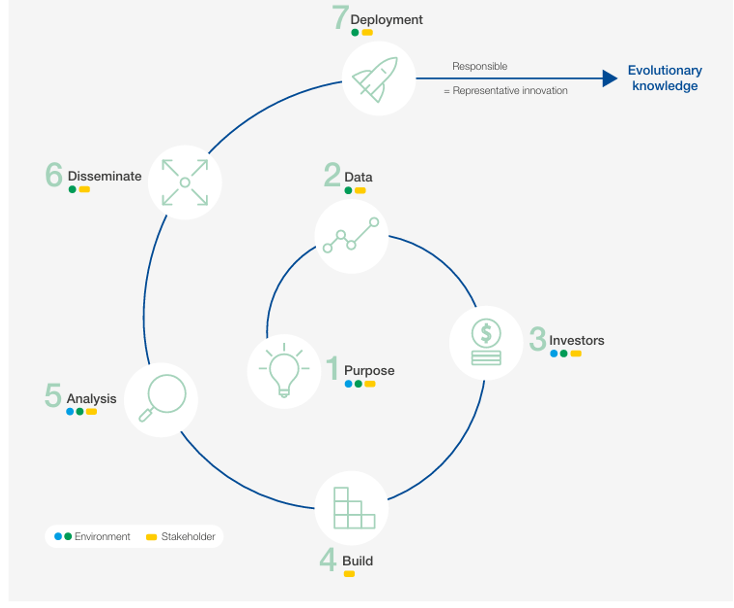
    Around the world, Indigenous communities are already reframing this relationship. A powerful example of Indigenous leadership in AI comes from the work highlighted by the World Economic Forums Blueprint for Equity and Inclusion in Artificial Intelligence Published in 2022. The report draws on concepts developed by Sarah Cole Stratton of the Māori Lab, whose Māori-informed framework reframes the AI life cycle through Whakapapa (interconnection), Whanaungatanga (relational responsibility), and Kaitiakitanga (guardianship). Stratton was a one of the lead contributors to the WEC blueprint, where her Representative, Responsible, Evolutionary AI Life Cycle was spotlighted. Unlike conventional AI lifecycles that spin in closed loops of bias and repetition, Stratton’s model unfolds like a koru, the unfurling Punga fern symbolizing growth, renewal, and continuity [6]

    This Māori-led framing offers a powerful alternative: an AI lifecycle that flows, unfolds, and adapts with each iteration, guided by community knowledge, environmental stewardship and shared governance. This reenvisioned lifecycle reflects broader truth, meaningful innovation is relational, iterative, and accountable, and it grows the way the koru does, always reaching toward responsible expansion.

    The Māori Lab “koru” (Sara Cole Stratton)[7]

    A blueprint for equity and inclusion in artificial intelligence.


    Data sovereignty: OCAP and the CARE principles

    This is where the principle of Indigenous data sovereignty becomes relevant and essential. It is the fundamental rights[8] and regional frameworks seen in the OCAP (Ownership, Control, Access, and Possession) principles in Canada. [9]

    An article written by the International Work Group for Indigenous Affairs (IWGIA), a global human rights organization dedicated to promoting and defending Indigenous Peoples’ rights, mentions[10] that Indigenous Peoples must be the decision-makers around how their data and cultural representations are used in digital systems.[11] In many cases, data collected from Indigenous and marginalized communities are extracted, commodified, and used without consent. Frameworks like the CARE Principles for Indigenous Data Governance (collective benefit, authority to control, responsibility, and ethics)12 remind us that data sovereignty is not just a technical standard, it’s a matter of respect, and self-determination.[12]

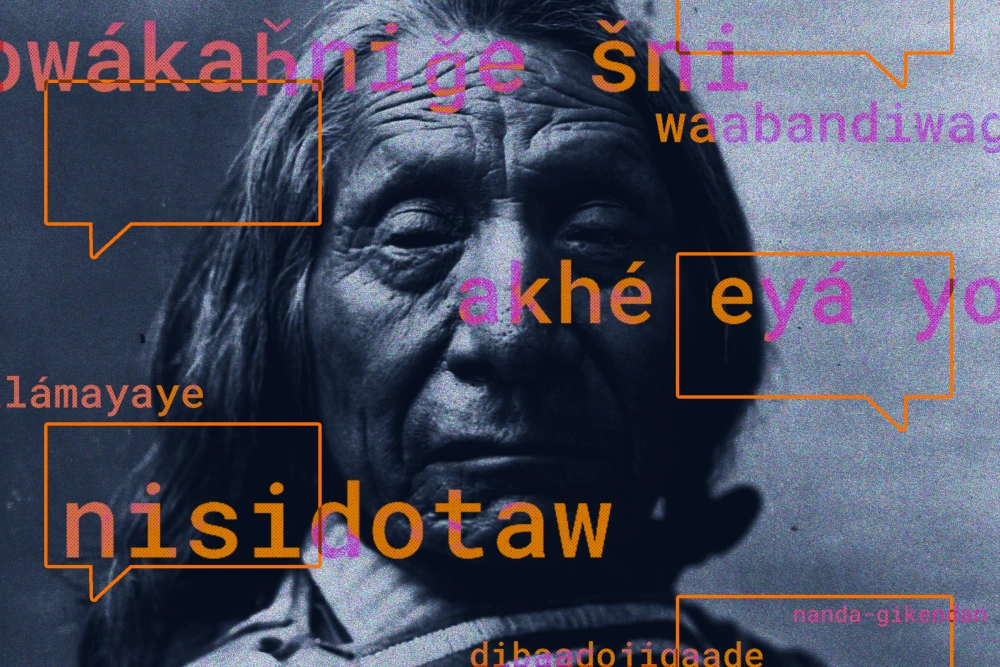
    AI obscures this landscape further. AI systems engage massive data sets, most of which are untraceable in origin and often reflect historical and systemic bias. When these models are trained on unexamined data, they stand a very reasonable risk of multiplying and mirroring inequality. Without Indigenous participation and oversight, many have raised concerns that AI has the potential to become what some scholars refer to as data colonialism: the monetization and extraction of language, culture, and knowledge without consent or accountability.[13]

    Indigenous AI in action: Examples from Latin America

    Bridging the digital divide requires structural reforms, such as ethical data practices that respect community consent and autonomy and policies that support inclusive participation and cultural preservation.[14] Some countries have already begun experimenting with Indigenous-led AI initiatives that prioritize cultural preservation and community-led governance.

    For example, a report titled Indigenous People-Centered Artificial Intelligence: Perspectives from Latin America and the Caribbean[15] emphasizes the importance of participatory inclusion, ethical data use, and AI systems rooted in Indigenous knowledge systems.[16] The digitization of Indigenous data must guarantee their right to self-determination and to govern their data, to use them under their values and common interests, the free, prior and informed consent for their collaborative participation, and to ensure their privacy and intellectual property rights”.[17] Some of the examples that include these protocols include:

    • Researchers from the Technological Institute of Oaxaca created an AI-driven app that supported Tu’un Savi language revitalization, offering pronunciation and writing guidance using mobile phone cameras.[18]
    • Researchers in Veracruz used natural language processing to evaluate pronunciation in Indigenous languages, supporting educational access.[19]

    These examples highlight using DEIA values in the container of AI in an inclusive way.

    Reconciliation in the digital age: Canada’s path forward

    While we have been speaking about the AI ethics globally, the conversation about AI in the Canadian context must expand to include Indigenous data governance, and Indigenous sovereignty must be grounded in the TRC’s Calls to Action and the broader context of reconciliation. The conversation between AI and DEIA must be had with DEIA values in mind, and these values include living/lived experience, equity, and critical approaches, which are important when discussing the intersection of AI and DEIA in relation to supporting racialized and marginalized communities. Without intentional design, inclusive policy, and Indigenous leadership, AI risks becoming another tool of assimilation and exclusion.

    With the advent of this new and rapidly emerging technology, as well as the issues that have been brought up globally by the UN and UNESCO, we are forced to critically examine where it leaves us. As we think about the TRC and the Calls to Action, we should ask ourselves whether AI perpetuates the same discriminations for Indigenous Peoples as before. Over the past 10 years, we have been shown that reconciliation is not static; it must evolve in conjunction with shifting social, political, and technological circumstances. And, in the present moment of rapid AI innovation, reconciliation must also contend with the frontier of digital sovereignty and techquity.

    So, when we think about how Indigenous communities are affected by AI and its potential of mirroring harmful and historical patterns of dispossession, it can be scary when there is no control or guidelines that can mitigate these risks of digital exploitation and reinforcement of biases. Techquity allows for AI to be utilized in a container, and thinking about DEIA values, ensures human-centered approaches that can protect Indigenous People’s rights, empowering them as decision-makers and, if they choose to participate, allowing them to engage with the technology on their terms.[20] This approach lays the groundwork for an inclusive AI future, one in which Indigenous communities continue to shape the technologies in ways that honor their knowledge, autonomy, and rights.

  • Care over convenience: Centering DEIA in everyday choices

    Care over convenience: Centering DEIA in everyday choices

    Making meaningful choices amid chaos 

    In recent years, I’ve focused my work on putting people and our planet first. Whether it’s guiding companies through B Corp certification or supporting diversity, equity, inclusion, and accessibility (DEIA) initiatives, I’ve seen firsthand how everyday choices can add up. 

    At home, putting my values into action feels more complicated. Parenting adds a whole new level of chaos. Between juggling time, tight budgets, and temper tantrums, every decision feels more tangled and personal, and I often question if my small actions really make a difference. 

    It started with a birthday party 

    For my son’s sixth birthday, I set out to throw him the ultimate Sonic the Hedgehog celebration. I went straight to the party store and loaded up on themed decorations, shiny balloons, and favors; everything I thought would make the day magical. 

    But somewhere between the floor-to-ceiling aisles of shiny decor and the checkout line, I froze. My cart was overflowing, and so was my guilt. 

    This wasn’t the first time I’d felt that tension: the pressure to pull off a Pinterest-worthy moment clashing with the voice in my head whispering, who is this for? 

    When the easy path isn’t the right one 

    I saw at that moment what I’d been trying not to: the uncomfortable, inconvenient thoughts I usually pushed aside. I wanted to create a special day for my son, but I knew everything in my cart would likely end up in the trash by the next morning.  

    Still, the pressure was real, especially as a parent. It’s easy to compare and feel like we’re falling short. We’re bombarded with images of curated “perfection”: balloon arches, custom cakes, and themed snack tables. The message is loud and clear: More is better. And if you skip the loot bags? Cue the mom guilt.


    The real cost of convenience 

    Feeling overwhelmed, I emptied my cart and left the store with only a few paper balloons. I didn’t have a plan, just a terrible feeling in my gut I couldn’t ignore. 

    From there, I started exploring more sustainable options for my son’s party and asking deeper questions about who might be carrying the cost of my everyday choices. The more I uncovered, the more uneasy I felt.  

    Climate change, pollution, and toxic waste aren’t abstract problems. They land heaviest in the places and communities that have been overlooked for years. Places where people were already fighting to be seen and heard. 

    Not everyone experiences “the environment” the same way. I started noticing that zero-waste choices, the kind of things we often hear about, aren’t really an option for many people. Often, those conversations come from places of privilege – people with time, money, and access. Meanwhile, the people facing the harshest effects of environmental harm usually have the least power and resources. 

    Facing the hidden impacts, often paid in dignity, labor, land, or wellbeing, meant confronting my habits rooted in convenience and privilege. And that was the hardest part: choosing to keep learning, even when it was uncomfortable, and making space for humility and choices that felt more aligned with my values. 

    Why DEIA drives sustainability 

    At first, I thought sustainability was mostly about stuff: what we buy, what we throw away, and what we recycle. But over time, that view started to feel too narrow and too simple. 

    When I started paying closer attention, I could see how the impact of my choices reached far beyond my home. The things that make life easier for me often come with a price that others end up paying. That cost might show up in: 

    • unsafe working conditions 
    • polluted neighborhoods 
    • limited access to clean water and air 

    It’s not evenly shared, and it doesn’t show up on a receipt. 

    To take care of the environment, we need to take care of each other. When we put equity, inclusion, and accessibility front and center, we come up with ideas that work for more people and stand the test of time. Without it, we’re just repeating the same broken systems, only this time with reusable tote bags.

    Leaning into intention 

    Do I still get it wrong? Absolutely. There are days when convenience wins, and I forget to ask better questions. But I’m learning to pause and choose more intentionally whenever I can, grounding myself in these questions: 

    • Who is connected to this choice? 
    • Who benefits? 
    • Who might be left out? 

    Every choice we make says something about what matters to us. And even small, imperfect actions can build momentum when we stay curious, open, and willing to keep learning. 

    A future worth celebrating 

    For me, everything came into focus in aisle five; and since then, it’s grown into a new way of seeing, choosing, and showing up. 

    And you know what? My son had the best birthday. 

    We gifted reusable Sonic the Hedgehog mugs from a local sustainable shop instead of the usual plastic loot bags, and he proudly explained why it was better for the planet as he handed them out to his friends. The decorations (or lack of them)? He didn’t even notice. He was too busy having fun. 

    I’m still figuring it out. I don’t have all the answers. My kids keep reminding me that being present is way more important than making everything look perfect, and that teaching them to be part of the solution starts with how I show up. 

    For me, sustainability is more than the choices I make. It’s about being willing to see the impact of those choices and staying curious enough to keep learning and growing, even when it feels uncomfortable or messy. 

    So, what will your next choice say about the world you want to create? 

  • Calling all allies: sharing and learning from CCDI queer professionals

    Calling all allies: sharing and learning from CCDI queer professionals

    By Anthony Lombardi, Iván Barradas, MacKenzie Pudwell, and Viktória Belle 

    In recent months, Canada, long regarded as a progressive and inclusive nation, has witnessed a disturbing rise in threats and hostile actions directed towards 2SLGBTQIA+ communities. Despite legal protections and social advancements, individuals identifying as part of this diverse collective continue to face increasing aggressions, violence, and discrimination. From alarming instances of hate crimes to the amplification of anti-2SLGBTQIA+ rhetoric in media and political discourse, the safety and well-being of many Canadians are under growing threat.  

    To raise awareness of this challenging reality, CCDI has formulated the following question to four members of our staff who identify themselves as queer persons: 

    Considering the rising threats to DEIA efforts in our country, what is your personal and professional contribution to help building safety and inclusion for other 2SLGBTQIA+ persons in Canadian workplaces? 

    Here are their answers. 

    ___ 

    Anthony Lombardi (he,him) 


    Growing up gay, the fear of being found out followed me everywhere I went and seeped into everything I did. Now, as a secure and confident gay man, that fear no longer haunts me. However, I recognize that the depth of the shame I carried for two decades determined the direction that my life would take, and it informed how I would get there. It was at the root of my decision to do everything I could so that others who live in similar shame would find the support needed to overcome the barriers that inhibit the expression of their true self. I had decided that anything less than authentic was just not good enough.   

    The journey of my activism started with volunteering a few evenings a month at a help and information phone line for those grappling with their sexual and/or gender identity. It was heartbreaking to know that there were so many people out there who still had not come to the realization I had come to – that they were just as worthy of love and respect as everyone else.   

    Outside of my volunteer hours, I began speaking freely about gender and sexual inclusion because even though people around me were not struggling with their identity, their ability to understand certain issues that were distant from their own reality greatly influenced their world view – one that may not have recognized the need for the safe spaces I was trying hard to create. 

    Now, another two decades later, I am working at the Canadian Center for Diversity and Inclusion with organizations dedicated to creating safe workplaces. Once I turn off my computer at the end of the day or on a Friday afternoon, I step back into a world where my meetings and projects may be invisible, but the threats to inclusion continue to wreak havoc. So, if I truly want there to be safe spaces for the diversity that surrounds all of us, I must understand that this mission is not one that I can simply relegate to the confines of a 40-hour work week or the occasional volunteering opportunity. I must weave this effort into both the professional and personal spheres of my life, through empathy-building, awareness raising, education, and active listening. 

    I have worked hard so that I would not be forever scarred by the shame that enslaved my identity for 20 years. It is impossible to understand the feeling of such heavy shame when your existence is not under constant opposition. I argue that it is not even necessary to really understand it. What indeed is necessary is the collective act of sharing our spaces without casting onto each other the burdenous obligation to justify one’s existence in it. This practice is something that I speak about with my teams at work, with my friends, and with my family. I do so because I believe that honest and healthy conversation raises our awareness of where we can do better and be better. 

    I thank you for joining me on this journey to building a safer space for us all. — Anthony  

    ___ 

    Iván Barradas (he,him) 


    As a DEIA educator and a person belonging to the 2SLGBTQIA+ collectives in Canadawith a particular devotion and a professional background rooted in the fields of adult teaching and modern languages, it is indispensable for me to use (and promote the usage of) the most adequate and updated terminology when referring to other folks who identify themselves as individuals or allies of the 2SLGBTQIA+ communities, and who possess lived or living experience on the matter. 

    Thus, one of my most noteworthy contributions has been the collaboration with the Research Team in the annual review of CCDI’s DEIA Glossary of terms, where I had the opportunity to discuss, amend, and update several entries and definitions for a better understanding of 2SLGBTQIA+ realities in our country. For example, some important notions such as ‘enbyphobia’i, ‘endosex’ii and ‘heterocisnormativity’iii, were added to the glossary, as well as some amendments to the previous definitions of ‘romantic orientation’iv and ‘transness’.v 

    Although such an endeavor is a fascinating way of learning and disseminating knowledge, it must however be noted that it is not precisely an easy task. Sexual orientations, gender identities, and gender expressions are complex, fluid, and constantly changing, and cannot be addressed applying a “rigid” approach. Some terms that were widely used some years ago are no longer valid, while others that were vaguely defined (such as ‘queer’vi) required further research.   

    On the other hand, it is important to acknowledge the fact that having some living experience related to terminology (or interviewing persons who have it) has made a huge difference to correct or clarify the content. Furthermore, navigating the particularities of English and French languages, as well as the distinct perspectives that some entries have – according to Indigenous Peoples, Francophone communities, English-speaking researchers, and Allophone groups – has made this experience totally rewarding. 

    To all those 2SLGBTQIA+ folks living in a state of distress in Canada, I send tons of courage. —Iván  

    ___ 

    MacKenzie Pudwell (she,her) 


    DEIA is currently receiving a new wave of resistance backlash and is being targeted by anti-rhetoric. It is essential in this turbulent time to actively create safe spaces in the workplace and society for equity-deserving groups. This very much includes 2SLGBTQIA+ communities, whose rights, protections, and access to resources are being challenged—not just in the U.S., but here in Canada as well.  

    As a queer professional, I’ve encountered, assumptions, tokenization, and barriers to inclusion based on my identity and my community. While I have endured homophobia and sexism, I recognize that I am a queer, White, cis woman and that my experience is not representative of all 2SLGBTQIA+ folks. The diversity within our community is beautiful and complex, but I acknowledge my limitations and still choose to show up and support my community.  

    Professionally, I try to support the development of queer-inclusive content and leverage learning about all 2SLGBTQIA+ identities, issues, and experiences to expand my knowledge. Ultimately, I try to create awareness around the socio-political influences in Canada that are negatively impacting our community. To get a clear picture of what’s going on in your regions, I invite you to connect with your local 2SLGBTQIA+ groups today. From proposed book bans, limiting health care access to outing policies, you might be sadly surprised.   

    Personally, I had the immense honour of marrying my now amazing wife this year. Every step of planning became an opportunity to educate and challenge assumptions within the wedding industry. Sometimes, we were pleasantly surprised – shoutout to our photographers for their inclusive approach. Other times, we had to pause and offer alternatives, suggest more inclusive language, or point out problematic practices. Many vendors received this feedback openly and made changes. Others didn’t, which was disappointing, but a sign that our values didn’t align.  

    We wanted our wedding to connect with our local 2SLGBTQIA+ Alberta community. So instead of gifts, we asked people to donate to the Skipping Stone Foundation, a local charity supporting young trans and non-binary folks, who are being particularly targeted politically in Alberta. Some of our family hesitated, worried it might make others uncomfortable, and we responded, “If this is their line, then it probably means they aren’t meant to celebrate our love and the beautiful community to which we belong.” 

    Inclusion isn’t a one-time donation, policy, or gesture. It’s a daily commitment, made up of actions, missteps, learning moments, and intentional efforts in all areas of our lives. Building safe, inclusive spaces is ongoing work, and I’m committed to continuing that work alongside all of you.  

    I look forward to our journey. — MacKenzie  

    ___ 

    Viktória Belle (she,they) 


    Audre Lorde reminds us that “revolution is not a one-time event.vii When I think of revolution, I think of the 2SLGBTQIA+ community and how we all continue to build small and large revolutions every day around the world. 2SLGBTQIA+ people have always existed and will always exist, which means there is a rich legacy to learn from and follow. 

    Personally and professionally, I work to prioritize opportunities for safety and empowerment, amplifying the voices and teachings of 2SLGBTQIA+ people in my daily life and work. This can sometimes happen by speaking up when discrimination, misgendering, or exclusionary acts are happening in real time. It can look like: prioritizing naming injustice in relationships or in workplace structures, when it is safe to do so; asking someone to consider humanity and humility, despite the rise of hate through education; or offering resources and holding space. Often, we spend so much time talking about safety, how to stay safe, how to be safe, how to keep each other safe, that it takes up so much space and time in the lives of many 2SLGBTQIA+ people. Celebrating our joy and humanity is an act of resistance and a small, quiet revolution in itself. And allies can play a huge role in sharing some of that good and hard work of education and holding space.  

    In Canada and all over the world, the rise of identity-based threats and hate tears communities apart and costs our people their dignity and lives. I hope everyone out there feels some sort of responsibility to show up for 2SLGBTQIA+ communities in and out of your workplace, offer your kindness and humanity, and let someone know they matter. Now more than ever, collective care and solidarity are vital. I’m inspired every single day by my wife and partner, my family and friends, my comrades and colleagues, who continue to amplify our diverse voices, dispel misinformation, and risk their lives for the sake of ALL our collective liberation.  

    Thank you all so much. —Viktoria 

    ___ 

    If you are in Canada and experiencing distress or harm due to rising threats against the 2SLGBTQIA+ communities, please know that you are not alone. You can contact the following services for free and confidential support: 

    Egale – Canada’s leading organization for 2SLGBTQI people and issues. They improve and save lives through research, education, awareness, and by advocating for human rights and equality in Canada and around the world. Available in English and French. 

    Interligne – 24-hr help and information line for LGBTQ+ people, their loved ones, and professionals from various background (accessible throughout Canada and the Francophonie worldwide). Available in English and French. 

    It Gets Better Canada – Envisions a day when no young person in Canada feels marginalized, isolated, excluded or rejected because of their sexual orientation, gender identity, and gender expression. Available in English and French. 

    HPV Global Action – For inclusive information about general sexual and reproductive health. Also delivers inclusive presentations to schools and academic institutions. Available in English and French. 

    Aide aux Trans du Québec – Support and demystification of trans and non-binary identities. Available in English and French. 

    The LGBT+ Family Coalition – Advocacy and support for non-traditional families. Available in English and French.